


A Vet’s Ultimate Guide to Flyball for Your Athletic Dog (2025) 🐶🚀
Dans cet article
A Vet’s Ultimate Guide to Flyball for Your Athletic Dog (2025) 🐶🚀
By Dr. Duncan Houston BVSc
Hi, I’m Dr Duncan Houston BVSc, veterinarian and founder of Ask A Vet. If you have a high-energy or working dog, you might be searching for a safe, structured way to help them burn energy while having fun. Flyball is a fast-paced, team-based relay dog sport that combines speed, fitness, and teamwork—perfect for athletic pups. In this **vet-approved guide**, we'll explain what flyball is, walk you through training progression, highlight the health and behavioral benefits, provide safety and equipment tips, and show how to support your athletic dog using Ask A Vet checklists—all tailored for 2025. 🩺🐾
1. What Is Flyball?
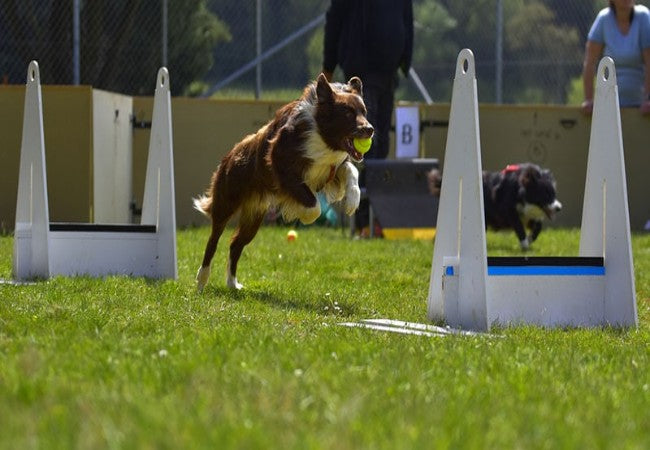
Flyball is a canine relay race where teams of four dogs compete side-by-side. Each dog runs through a sequence of four hurdles, triggers a spring-loaded box to release a tennis ball, catches it, and races back over the hurdles. It's accessible to all breeds—small, giant, or mixed—and built around innate fetch, speed, and drive behaviors.
2. Health & Behavioral Benefits
- 🐕 High-intensity exercise: Boosts cardiovascular fitness, coordination, and muscle tone.
- 🧠 Mental engagement: Racing, obstacles, and box turns require intense focus & problem-solving.
- 🤝 Bonding & Teamwork: Handler–and–dog communication strengthens as you work toward shared goals.
- 🐾 Socialization: Clubs and team events get dogs mingling and behaving well with others.
- 🧘 Confidence & focus: Structured environment helps confident and reactive dogs improve impulse control.
3. Is Flyball Right for Your Dog?
Flyball suits any dog with:
- Strong fetch motivation and high energy
- Good basic obedience—sit, stay, recall
- Healthy joints and no gait-limiting conditions
- Comfort around other dogs in fast environments
If your dog has chronic conditions like arthritis or hip dysplasia, consult your vet or Ask A Vet before starting.
4. How to Begin Training
4.1 Foundation Skills
- Fetch & hold: Teach reliable ball return and holding until release (use “drop” cue).
- Jump control: Start low hurdles at home to build confidence.
- Box turn: Train the “swimmer’s turn” at the flyball box—tap pad, hold, rotate, catch.
4.2 Progression to Full Course
- Combine hurdles, box turn, ball retrieval, and return.
- Gradually increase speed and consistency.
- Partner with a local club or NAFA/U-FLI-affiliated trainer.
5. Equipment Essentials
- Hurdles: Four low jumps spaced ~5–10 ft apart, height set by smallest dog’s shoulder height.
- Flyball box: Spring-loaded with release pad—teach dogs to trigger it efficiently.
- Tennis balls: Durable, soft, fetch-safe.
- Collar and harness: Snug, comfortable, suitable for high-speed runs.
- Water & recovery tools: Keep pups hydrated & cool during sessions.
6. Safety & Injury Prevention
- Warm-up and cool-down to reduce injury risk.
- Monitor for signs of fatigue, limping, or joint strain.
- Choose low-impact surfaces—grass or mats preferred over concrete.
- Avoid intense training during extreme heat.
- Regular vet checks—discuss with Ask A Vet prior to starting and when injuries occur.
7. Equipment Enhancements & Vet Support
- Ask A Vet App: Use checklists, injury guidance, and telehealth after training or during recovery.
8. Joining Flyball Clubs & Competition
- Find local clubs via NAFA or U-FLI—they hold sanctioned meets.
- Clubs offer mentorship, team structure, and help with AKC and NAFA titles.
- Titles include Flyball Dog Champion (FDCh), Flyball Grand Champion (FGCh), etc.
9. Real-Life Case: MAX’s Flyball Fun
Case: Max, a high-energy Border Collie
Max’s owner wanted a structured outlet for his energy. Beginning with fetch drills, hurdle training, and box-turn practice, Max soon joined a local flyball team. With warm-up routines and regular vet checks via Ask A Vet, he raced effectively for two seasons without injury.Mats helped him calm down after practice. Max now competes regularly and thrives mentally and physically.
10. FAQs
-
Do small dogs participate?
Yes—height is adjusted; tiny dogs compete successfully. -
Is it bad for aging dogs?
Older dogs can participate with vet approval and adjusted intensity. -
How long before competition?
8–12 weeks of consistent, injury-free training.
📌 Final Thoughts from a Vet
Flyball is a dynamic and rewarding sport—physically demanding and mentally stimulating—for dogs that fetch, sprint, and thrive on focus. With a proper training foundation, injury prevention, socialized team settings, and enrichment support from and Ask A Vet check-ins, your athletic dog can enjoy a fulfilling, safe, and bonded flyball journey in 2025. Let the races begin! 🐾❤️


