


Hernias in Puppies 2025: Vet Reviewed Guide to Types, Diagnosis, Treatment & Care 🐶
Dans cet article
Hernias in Puppies 2025: Vet Reviewed Guide to Types, Diagnosis, Treatment & Care 🐶
By Dr. Duncan Houston BVSc
Finding a lump on your puppy can be alarming—but hernias are surprisingly common and often treatable. In this comprehensive guide, I’ll explain the different types of hernias (umbilical, inguinal, diaphragmatic, perineal, hiatal), when to worry, how veterinarians diagnose and treat them, and how you can support your pup’s recovery safely—integrating Ask A Vet advice,
1. 🤔 What Is a Hernia?
A hernia happens when internal organs, fat, or tissue push through a weakened spot or opening in muscles or connective tissue, often causing a visible bulge. Severity depends on whether the contents are trapped or freely movable.
2. 🐾 Common Types in Puppies
- Umbilical: at the belly button, most common in pups. Fat or intestines may protrude during crying or straining.
- Inguinal: in the groin, can involve bladder, uterus, or intestines; may be visible as swellings.
- Diaphragmatic: a serious condition where abdominal organs herniate into the chest, affecting breathing.
- Hiatal: stomach protrudes through the diaphragm, causing regurgitation or reflux.
- Perineal: pelvic muscle weakness in older or unneutered males; rare in pups.
3. 🧬 Causes of Hernias in Puppies
Most are congenital (present at birth), resulting from genetic predisposition or developmental failures like incomplete closure of the umbilical ring or inguinal canal. Trauma and internal pressure (e.g., straining during birth) can also cause hernias.
4. 🔍 Spotting the Signs to Look Out For
- Visible soft or firm bulge that may change size.
- Pain or discomfort when the area is touched—especially in strangulation.
- Vomiting, lethargy, fever, loss of appetite, difficulty urinating or defecating.
- Breathing problems in diaphragmatic hernias.
5. ✅ Diagnosing Hernias in Puppies
Your vet will:
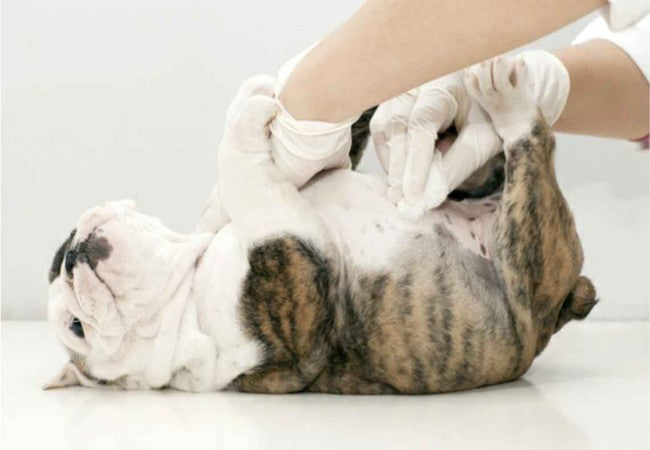
- Palpate for bulges during routine exam.
- Use fine needle aspirate or ultrasound/X‑ray to determine contents.
- Perform contrast studies for hiatal or diaphragmatic hernias.
6. 📋 Recognizing Reducible vs. Complicated Hernias
Reducible hernias can be gently pushed back; watchable if small and asymptomatic. Complicated types trap organs, risk strangulation, and need immediate surgery.
7. 🛠 Treatment Options
• Small reducible hernias
- Observation during puppy shots—some close spontaneously.
- Gently reducing the hernia daily may support closure.
• Surgical repair
- Umbilical and inguinal hernias are often repaired during spay/neuter.
- Large or complicated hernias need standalone surgery—with possible mesh reinforcement.
- Emergency surgery is required for strangulation.
8. 💸 What to Expect: Cost and Timing
Umbilical hernia repairs range from $150–$2,500, depending on complexity and location. Inguinal repairs may cost $400–$8,000, particularly with complications. Diaphragmatic hernias are more complex and expensive.
9. 🩹 Recovery & Post‑Op Care
- Restrict activity for 10–14 days, avoid jumping or running.
- Use an Elizabethan collar or Woopf Puppy Recovery Suit to protect incisions.
- Provide pain relief as advised by vet—no OTC human meds.
- Monitor incisions daily and keep the area clean and dry.
10. 📅 Long‑Term Outlook & Prevention
- Overall prognosis is excellent when treated early, with low recurrence.
- Spaying/neutering is recommended to prevent future hernias and breeding defects.
- Keep puppies safe from trauma—avoid rough play or high falls.
- Breeders should avoid breeding affected dogs to reduce genetic risk.
11. 🐕 Breeds & Risk Factors
Common breeds with congenital hernias include Airedales, Cocker Spaniels, Dachshunds, Weimaraners, Retrievers, Basenjis, and Pekingese among others. Obesity, pregnancy, and trauma increase the risk of acquired hernias.
12. 📝 When to Call the Vet Immediately
- Painful, non-reducible bulge, sudden swelling, fever, vomiting.
- Straining to urinate/defecate, collapsing, labored breathing.
- Any sudden changes—better to act early than wait.
13. 📌 Summary for Puppy Parents
- Hernias are common but often benign if small and reducible.
- Mild hernias may close naturally—but surgery during routine procedures often simplifies care.
- Prompt diagnosis and treatment help avoid serious complications.
- Always consult Ask A Vet for tailored advice between visits.
- Breeding decisions matter: avoid passing on congenital defects.


