


Mitral Valve Disease in Dogs – Vet Led Guide 2025 🐶❤️
Dans cet article
Mitral Valve Disease in Dogs – Vet Led Guide 2025 🐶❤️
By Dr. Duncan Houston BVSc
Hi, I’m Dr Duncan Houston, BVSc, founder of Ask A Vet. In this in-depth 2025 guide, we'll explore mitral valve disease (MVD)—also called degenerative mitral valve disease—in dogs, with deep insights on causes, stages, symptoms, diagnosis, treatment strategies, prevention, and holistic care. Whether you're caring for a young Cavalier or a senior Chi, this guide brings clarity, warmth, and support 🐾.
What Is Mitral Valve Disease?
The mitral valve regulates blood flow between the left atrium and ventricle of the heart. In MVD, it thickens or flops, allowing blood to leak back (regurgitation), forcing the heart to work harder and potentially leading to heart enlargement and breathing issues .
Also known as myxomatous mitral valve degeneration or chronic valvular disease, MVD is progressive and currently incurable .
📊 How Common Is It?
MVD affects nearly 10% of all dogs, especially older small breeds. Approximately 75–85% of canine heart disease is due to MVD . By age 13, about 85% of small breeds show signs .
Breeds at highest risk include:
- Cavalier King Charles Spaniels (heart murmurs often begin as early as 2–5 years old; heart disease is a leading cause of death) .
- Miniature poodles, dachshunds, chihuahuas, cocker spaniels, toy breeds .
🚦 Disease Stages (ACVIM System)
- Stage A: At-risk breeds with no murmur or structural changes .
- Stage B1: Murmur present, minimal leakage, no heart enlargement .
- Stage B2: Murmur + structural enlargement; medication recommended .
- Stage C: Signs of congestive heart failure (coughing, fluid in lungs). Requires diuretics and possibly oxygen .
- Stage D: Refractory CHF unresponsive to standard meds; advanced therapy and hospitalization often needed .
🚩 Signs & Symptoms to Monitor
Symptoms depend on the disease stage:
- Heart murmur (1–6 grade); the first clue.
- Exercise intolerance, fatigue, weakness.
- Cough—especially at night or after exercise .
- Rapid or labored breathing; resting rate >30–35 breaths/min .
- Fainting (syncope) in severe cases .
- Weight loss, poor appetite .
🏥 How Veterinarians Diagnose MVD
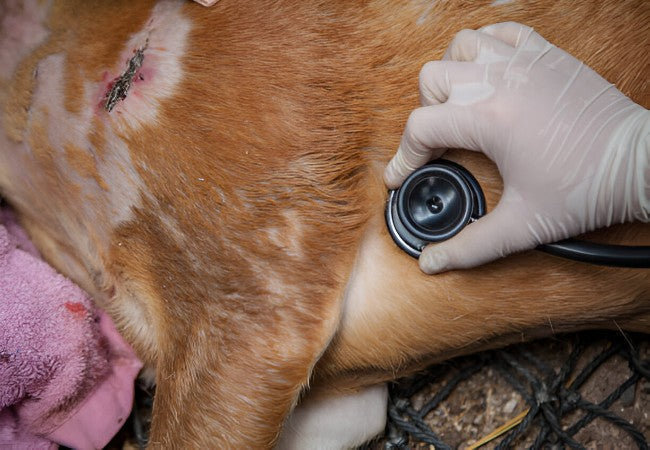
- Stethoscope exam: Detects murmurs, often graded by severity .
- Chest X‑rays: Assess heart enlargement and pulmonary edema .
- Electrocardiogram (ECG): Detects arrhythmias such as atrial fibrillation .
- NT‑proBNP blood test: Indicates heart strain .
- Echocardiogram: The gold standard—evaluates valve structure, leakage, and chamber size .
- Blood pressure/lab tests: Assess overall health before starting medications .
💊 Treatment by Stage
Stages A & B1
No medication is needed, only regular checkups every 6–12 months. Early detection is key .
Stage B2
Introduce pimobendan—shown to delay onset of CHF—and dietary changes plus monitoring .
Stage C
- Diuretics: Furosemide or torsemide to reduce fluid build-up .
- Pimobendan: Improves contractility and vasodilation .
- ACE inhibitors: Benazepril or enalapril lowers cardiac workload .
- Others: Digoxin, diltiazem, beta-blockers as needed .
- Oxygen support: Flow-by or cage oxygen for respiratory distress .
Stage D
High-dose diuretics, IV meds, intense monitoring, and potential use of advanced diuretics under specialist care .
🍽️ Nutrition & Holistic Support
Optimal diet and supplements support veterinary care:
- Low-sodium, high-quality protein diets to maintain lean muscle mass.
- Omega‑3 fatty acids support heart function .
- Coenzyme‑Q10, taurine, magnesium, and vitamin E for cardiac muscle support .
🏥 Holistic Veterinary Care
Integrating conventional and holistic care can relieve symptoms:
- Acupuncture and gentle massage may ease breathing and cardiac stress.
- Homeopathy should be overseen by a trained vet.
- Herbal supplements (e.g., hawthorn, reishi mushroom)—only with vet approval.
These support—not replace—medical therapies .
📆 Monitoring & Prognosis
Prognosis depends on stage:
- B2: Normal life expectancy with medication .
- C: With treatment, many live 6–14+ months; earlier stage detection significantly improves outlook .
- D: Survival is limited (median ~9 months), but quality of life can be preserved through intensive care .
Regular veterinary check-ups are crucial: every 6 months in early stages, every 3 months in advanced stages.
📌 Care at Home: Practical Tips
- Monitor resting respiratory rate (normal <30 bpm). Note changes & report trends.
- Limit strenuous exercise; maintain gentle walks and play.
- Ensure constant access to fresh water, especially if on diuretics.
- Track medication schedule, appetite, activity, breathing, coughing, and weight.
- Keep veterinary appointments and diagnostic tests timely.
🐾 Role of Ask A Vet
Need help managing your dog’s heart health? With Ask A Vet, consult instantly about dosing, medication changes, monitoring respiratory rate, or diet. comfy bedding & heart-healthy treats.
✨ Key Takeaways
Mitral valve disease is a common, progressive condition especially in small, aging breeds. Early detection through wellness visits is essential. While incurable, MVD is treatable—with stage-specific medications (like pimobendan and diuretics), diet, monitoring, and holistic support. Most importantly, home care, stress reduction, and strong vet collaboration help dogs live comfortably and happily for years.
Questions or concerns? Connect via Ask A Vet or download our app for 24/7 veterinary guidance and heart‑health support.