


Oral Melanocytic Tumors in Dogs – Vet Led Guide 2025 🐶🖤
Dans cet article
🩺 Oral Melanocytic Tumors in Dogs – Vet‑Led Guide 2025 🐶🖤
By Dr. Duncan Houston BVSc
Hello, I’m Dr Duncan Houston, BVSc, founder of Ask A Vet. In this 2025 update, we explore oral melanocytic tumors—especially the aggressive oral melanoma—to guide you through signs, diagnosis, treatment, prognosis, and supportive care for your pup. Let’s walk this journey together with empathy and expertise. 🐾
📘 What Are Oral Melanocytic Tumors?
These growths arise from melanocytes (pigment-producing cells). Dogs develop benign melanocytomas as well as malignant oral melanomas, which are highly aggressive and often deeply invasive.
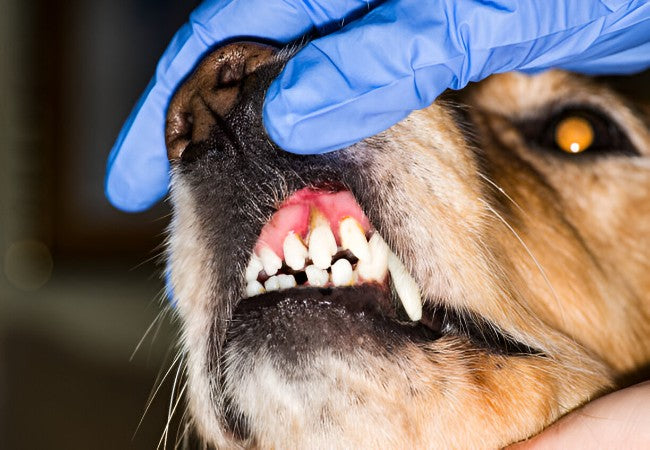
Oral melanoma is the most common oral cancer, accounting for 30–45% of cases. They may appear as pigmented (black) or non-pigmented masses.
📊 Risk Factors & Who’s Affected
Typically seen in dogs around 10–12 years old, though younger dogs can be affected. Breeds with dark oral pigmentation—Cocker Spaniels, Poodles, Golden Retrievers, Schnauzers—are overrepresented.
🚩 Recognizing the Warning Signs
- Pigmented or pale oral mass—often ulcerated or nodular
- Bad breath, drooling (sometimes blood-tinged)
- Facial swelling, loose teeth, and weight loss
- Pain eating, pawing at mouth, lip or tongue drooping
🔬 Diagnosis & Staging
- Physical exam: Assess mass, lymph nodes.
- Biopsy & histopathology: Differentiates melanoma from benign growths.
- Imaging: Chest X-rays/CT to evaluate spread; oral CT for bone invasion.
- Staging: WHO staging—Stage I (<2 cm), II (2–4 cm), III (>4 cm or lymph nodes), IV (metastasis).
- Bloodwork: Baseline health and readiness for therapy.
💉 Treatment Options (By Stage)
Surgery 🛡️
Wide-margin excision is first-line. For early (Stage I), median survival is ~17–18 months; Stage II, ~5–6 months; Stage III ~3 months.
Radiation Therapy
Coarse-fractionation radiation shows excellent local control (response up to 100%), and survival typically 211–363 days.
Chemotherapy & NSAIDs
Traditional chemo (carboplatin, melphalan) has 30% response rate (~4 mo). Piroxicam (NSAID) may also help.
Immunotherapy
The melanoma vaccine (DNA-based) extends survival (224–389 days), rising to 589 days with surgery/radiation. Nano-immunotherapies are emerging.
Multimodal Therapy
Combining surgery + radiation + vaccine can offer MST ~1120 days for small (<2 cm) Stage I tumors.
📅 Prognosis Overview
- Untreated: ~65 days
- Surgery only: median 5–17 months (21–27% survive 1 yr)
- Radiation alone: ~6–12 months
- Surgery + vaccine: MST ~589 days
- Stage I small lesions + multimodal: MST >3 years (~1120 days)
🏥 Post‑Op Care & Home Management
- Pain relief: NSAIDs/opioids.
- Soft food & small meals.
- Maintain oral hygiene (brushing, rinsing).
- Monitor incision, appetite, swelling.
- Check-ups: 2 weeks post-op, then every 3–6 months with imaging.
🏠 Home Monitoring Checklist
- Note eating ability, drooling, and oral odor.
- Inspect for new lumps, bleeding, swelling.
- Ensure hydration & pain-free appetite.
- Track weight and behavior.
- Stick to the vet follow-up schedule.
🐾 Role of Ask A Vet
Need real-time guidance on side effects, recovery, or symptoms? Chat with Ask A Vet anytime.Together, we support both health and heart. 💕
✨ Key Takeaways
- Oral melanoma is aggressive and may be pigmented or amelanotic.
- Early detection + multimodal therapy = best survival outcomes.
- Stage I small tumors have a significantly better prognosis with combined treatments.
- Home care (pain, diet, hydration, enrichment) deeply impacts quality of life.
If you suspect a mouth lesion—or are managing treatment—connect with your vet or Ask A Vet now. We’re here for you and your pup every step of the way.