


Vet‑Approved Guide to Dog Ear Infections in 2025 🐾🩺
Dans cet article
Vet‑Approved Guide to Dog Ear Infections in 2025 🐾🩺
By Dr. Duncan Houston BVSc
Ear infections are one of the most common problems I see as a veterinarian, and they can be painful! 😣 With the right care, however, most pups recover quickly and avoid complications. Here’s a detailed, vet‑backed guide on identifying, treating, and preventing ear infections in dogs in 2025.
🔍 What Causes Ear Infections?
Infections occur when bacteria or yeast (Malassezia) overgrow in the ear canal, often due to moisture, allergies, ear anatomy, or underlying health conditions. Puppies may also get ear mites.
🐶 Who’s Most at Risk?
- Breeds with floppy ears and moist canals: Basset Hounds, Cocker Spaniels, Beagles, Golden Retrievers, Labradoodles.
- Allergies (food or environmental): present in ~50–80% of dogs with repeated infections.
- Hormonal issues like hypothyroidism.
🔔 Key Symptoms
- Redness, swelling, and heat in the ear canal or flap
- Discharge—brown, yellow, bloody, or waxy; often smelly (like corn chips)
- Itchiness—pawing at ears, head shaking or tilting
- Pain—often reluctant to touch, chewing on one side
- Balance issues or hearing loss in severe cases
⚕️ Diagnosing Ear Infections
- Full physical exam + history (swelling, odor, itchiness)
- Otoscope to view the canal and eardrum
- Microscopic examination of the swab to identify bacteria, yeast, or mites
- Additional tests: allergy screening, endocrine workup (e.g., thyroid)
💊 Treatment Options
1. Cleaning & Topical Care
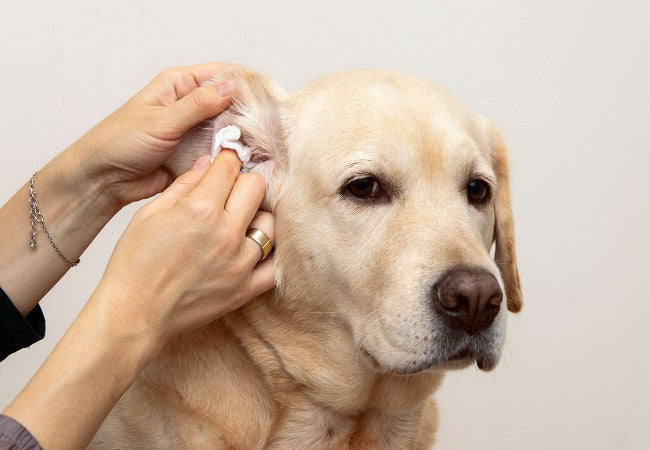
- Vet-demonstrated cleaning to remove debris and discharge
- Use vet-recommended solutions like Tris flush (antiseptic/antifungal) or ear wipes to keep ears clean and pH balanced
2. Medications
- Topical antibiotic or antifungal drops/ointments (bacterial vs fungal)
- Duotic (Terbinafine + Betamethasone)—FDA‑approved in 2024 for yeast infections
- Oral antibiotics, antifungals, and anti‑inflammatories for severe cases
3. Addressing Underlying Causes
- Treat allergies via diet trials or environmental controls
- Manage hormonal issues such as hypothyroidism
- Treat ear mites with specific insecticidal meds
4. Advanced Care & Surgery
In chronic or severe cases, structural changes may occur (e.g., thickened canal, aural hematoma). Surgery, like lateral ear resection or total ear canal ablation (TECA) may be recommended.
🛡️ Preventing Recurrence
- Clean and dry ears weekly (especially after swimming)
- Maintain parasite prevention against ear mites
- Manage allergies and hormones
- Monitor and treat early to avoid chronic damage
🗓️ Prognosis & Follow‑up
With proper vet-led treatment, uncomplicated ear infections clear in 1–2 weeks. However, recurrent or deep infections may need ongoing care and rechecks to prevent long-term issues.
👩⚕️ Vet’s Final Advice
- At the first sign of trouble, don’t delay a vet visit.
- Follow through with cleaning and the full medication course.
- Identify underlying issues to break the infection cycle.
- Schedule routine ear checks as part of wellness care.
Take the steps now and your pup will enjoy clear, comfortable ears—and a happier life! 🐶💖
Need help diagnosing or treating your dog’s ear infection? Visit AskAVet.com or download the Ask A Vet app for expert veterinary advice and personalized ear care plans. 🩺📱