


Vet Guide to 2025: Dog Wound Care — How to Safely Clean & Treat Minor Injuries at Home 🐶🩺
Dans cet article
Vet Guide to 2025: Dog Wound Care — How to Safely Clean & Treat Minor Injuries at Home 🐶🩺
By Dr. Duncan Houston BVSc
Dogs are naturally adventurous—and sometimes that means scrapes, cuts, or punctures. I’m Dr Duncan Houston BVSc, and this in-depth guide helps you confidently treat minor wounds at home: from cleaning and bandaging to infection control. You’ll also discover how Ask A Vet.✨
1. When to Treat at Home vs. See the Vet
- ✅ Home care is suitable for small scrapes, shallow punctures, minor abrasions.
- ⚠️ Vet required if bleeding is heavy, wound is deep (through skin to muscle/bone), contains debris that won’t come out, or shows signs of infection.
- 🐾 Always seek help if the wound is on the face, near joints or paw pads, or if your dog is in pain or distressed.
2. Build a Pet‑First‑Aid Kit 🧰
- Wound spray (Vetericyn-type), antimicrobial wipes, wound ointment (e.g., medical-grade honey).
- Styptic powder (for nail trims), gauze pads, vet‑wrap, bandage scissors, tweezers, and non‑latex gloves.
- Pet-safe antiseptic solutions like chlorhexidine or dilute povidone‑iodine—safe for pets.
- Recovery cone to prevent licking or chewing.
3. Step‑by‑Step Home Wound Care
- 🧘♂️ Stay calm & restrain your dog safely—use a muzzle or have help if necessary.
- 🩸 Control bleeding: Apply firm pressure with clean gauze. Most bleedings stop within 5–10 minutes.
- ✂️ Clip hair around the wound to reduce contamination.
- 🚿 Clean with warm water or saline to flush debris; add mild shampoo only if vet‑approved.
- 🧴 Disinfect with diluted chlorhexidine or povidone‑iodine; avoid hydrogen peroxide or alcohol (they delay healing).
- 🧼 Apply ointment like medical-grade honey or triple‑antibiotic cream.
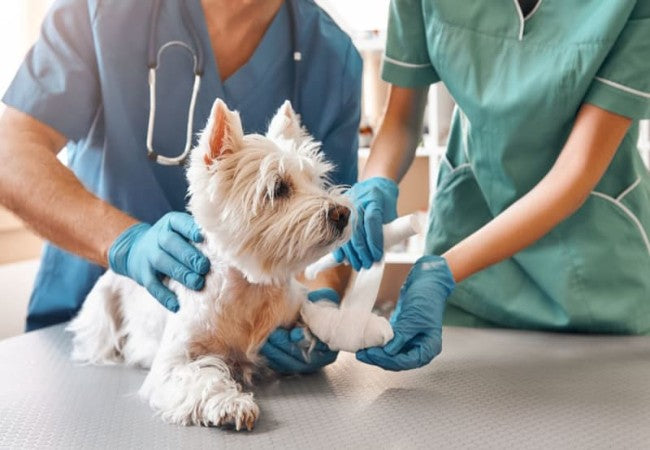
- 🩹 Cover if needed with non-stick gauze and vet‑wrap—especially for wounds on paws or limbs.
- 🔒 Prevent licking using an e‑collar or soft cone.
- 📅 Monitor & re-dress twice daily—look for swelling, discharge, odor. If infection appears, contact the vet.
4. Why Dogs Lick & When It’s a Problem
Dogs instinctively lick wounds to soothe pain and clean—but this can delay healing, introduce bacteria, and worsen infections. Always block licking with a cone or wrap.
5. When the Wound Needs Veterinary Care
- Punctures, bite wounds, or embedded debris—high infection risk.
- Heavy or prolonged bleeding, deep cuts, or exposed tissue.
- Signs of infection: redness/swelling, pus, foul odor, pain, fever or lethargy.
- Burns, wounds on face, joints, or paws → risk of complications.
6. Support from Ask A Vet,
- 📱Ask A Vet: Instantly share photos for professional triage and healing advice.
7. FAQs 💡
- Q: Should I bandage every wound?
- No. Only wounds at risk of getting dirty or chewed need dressing. Leaving small wounds open can aid drying and healing.
- Q: Is hydrogen peroxide OK?
- No—peroxide and alcohol damage good tissue and delay healing.
- Q: How long until healed?
- Minor wounds often close in 5–7 days. Keep monitoring; any infection signs require vet care.
Conclusion
With calm care, the right supplies, and vigilance, most minor wounds can be managed at home. But don't delay vet care if the injury is deep or signs of infection emerge. Use Ask A Vet for guidance and support. Together, we’ll keep tails wagging and pups healthy! 🐾❤️


