


Vet Guide to Canine Acne (Muzzle Folliculitis & Furunculosis) in Dogs 2025 🐶✨
Dans cet article
Vet Guide to Canine Acne (Muzzle Folliculitis & Furunculosis) in Dogs 2025 🐶✨
By Dr. Duncan Houston BVSc
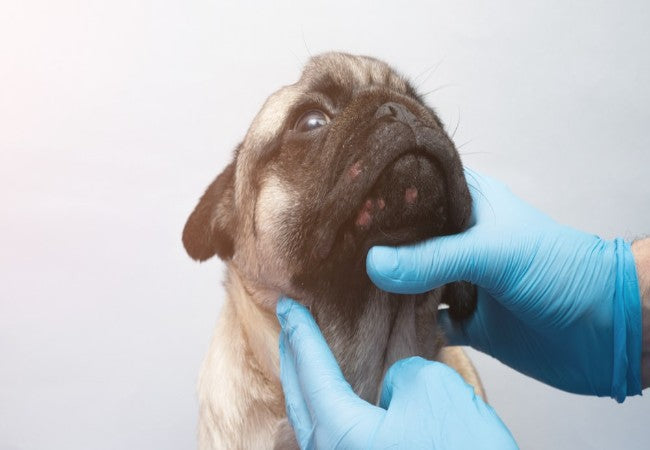
Canine acne, including muzzle folliculitis and furunculosis, is an inflammation (and sometimes infection) of hair follicles around the chin and muzzle. It commonly causes red bumps, blackheads, pustules, crusting, swelling, and sometimes pain or discharge.
📍 Who’s at Risk & Why
- Common in young, short-faced breeds like Boxers, Bulldogs, Great Danes, Dobermans, Rottweilers, Weimaraners, and Staffordshire Terriers.
- Triggers include: follicle irritation from chin rubbing, trauma, plastic bowls; excess sebum + clogged pores; bacterial overgrowth (e.g., Staph); allergies or hormonal changes.
- Age factor: often affects puppies and adolescents under 12 months, though adults can suffer recurrent flare-ups.
⚠️ Signs to Watch For
- Red papules, pustules, and blackheads on the chin, muzzle, and lower lips.
- Crusted or inflamed areas, swelling, discharge, sometimes itchiness or pain.
- Severe cases may progress to deep pyoderma, causing draining tracts, nodules, scarring, or hyperpigmentation.
🔬 How It’s Diagnosed
- Clinical exam: visual diagnosis of lesions around the muzzle.
- Skin cytology/scraping: identifies bacteria or yeast; rules out mites, ringworm, and demodicosis.
- Cultures or biopsy: needed for recurrent, deep, or resistant cases.
- Systemic check: labs and endocrine testing if underlying disease (allergies, Cushing’s) is suspected.
💊 Treatment & Care
- Topical wash: benzoyl peroxide or chlorhexidine cleansers to unclog pores and control bacteria. Daily or every-other-day use.
- Topical antibiotics: prescribed if secondary infection is present.
- Oral antibiotics: for deeper infections—e.g., cephalexin, clindamycin, or trim‐sulfa, often for 3–4 weeks.
- Anti-inflammatories: short-term steroids if severe inflammation; long-term alternatives like omega-3s for chronic cases.
- Hygiene & environmental changes: stainless/ceramic bowls, clean bedding, gentle muzzle cleaning.
- Address triggers: identify and treat allergies, avoid chin trauma, and maintain healthy skin balance.
📈 Prognosis & Follow‑Up
- Mild cases often resolve with good hygiene and topical care.
- Deep infections may need extended treatment and may scar or recur.
- Recurrence is common in predisposed breeds—ongoing management is key.
✅ Dr Houston’s Expert Tips
- 🛁 Clean the chin daily with gentle pet-safe wipes—avoid human acne products.
- 🥣 Use stainless or ceramic bowls and clean them often—plastic harbors bacteria.
- ✂️ Prevent chin rubbing by trimming rough fur and avoiding abrasive surfaces.
- 📆 Schedule skin re-checks after 2–4 weeks to ensure resolution and prevent relapse.
- 📋 Consider allergy testing if acne reoccurs seasonally or with other symptoms.
If your dog has persistent chin/ bumps, discharge, or irritation, seek vet care. With tailored hygiene, topical treatment, and medical support, canine acne is manageable, helping your pup stay comfortable and confident. 🐾❤️
📌 FAQs & Support
- Can I squeeze pimples? No—popping worsens inflammation and may cause scar tissue or spread infection.
- Should I switch bowls? Yes—plastic often worsens acne; stainless or ceramic is safer.
- How long will it take? Mild symptoms clear in 2–3 weeks; deep infections may require months of care.
- Can it come back? Yes—especially if underlying factors aren’t addressed. Ongoing care is crucial.
Need a printable treatment log, topical care checklist, or allergen‑avoidance plan? Just ask—we’re here to help! 🐶🩺