


🩺 Vet’s 2025 Guide to Canine Progressive Retinal Atrophy (PRA) 🌙 A Path to Blindness with Adaptation
Dans cet article
Vet’s 2025 Guide to Canine Progressive Retinal Atrophy (PRA) 🌙 Diagnosis, Genetics & Comfort
By Dr. Duncan Houston BVSc
💡 What Is PRA?
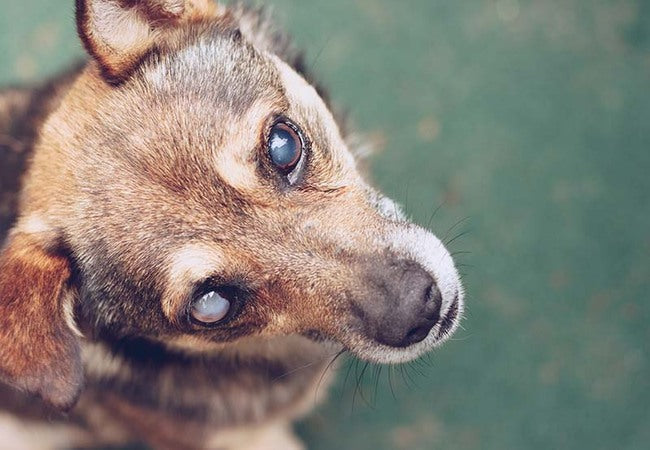
Progressive Retinal Atrophy (PRA) describes a group of inherited degenerative disorders of the retina—specifically the rods and cones—that lead to gradual vision loss and eventual blindness. This process typically begins with deterioration of low-light vision and progresses, over months to years, toward complete loss of sight.
1. Genetics & Inheritance 🧬
- Mostly autosomal recessive—some X-linked (e.g., Siberian Husky) or dominant forms (e.g. Bullmastiff).
- Over 20 genetic mutations identified—one example is PRCD gene in poodles, retrievers, spaniels, Australian Cattle Dogs.
- Early‑onset dysplasias present by weeks to months; late‑onset degenerations typically appear between 3–11 years, depending on breed and mutation.
- Commonly affected breeds include Poodles, Cocker Spaniels, Terriers, Labrador Retrievers, Dachshunds, Collies, Akitas, Samoyeds, Tibetan Spaniels, Man..
2. Clinical Progression 🚶♂️
- Night-blindness: first sign—pupils dilate; dogs hesitate in dim light or unfamiliar indoor spaces.
- Gradual loss of day and color vision as cone cells degenerate.
- Fundoscopic findings: attenuated retinal vessels, hyperreflective tapetum, pale optic disc, and eventual pigmentary changes.
- Painless progression—dogs often adapt well until vision is nearly gone.
3. Diagnostic Tools 🧪
- Ophthalmoscopy reveals vascular thinning, tapetal shine.
- Electroretinography (ERG): confirms function loss—especially early in the disease.
- Genetic testing: screens for known mutations in at-risk breeds; carriers should not be bred.
4. No Cure—but Eyesight Can Last 🛡️
Currently, no treatment reverses PRA. However, research—such as gene therapy studies in dogs and mice—offers future promise.
Vitamin A/antioxidant supplements lack clinical proof but are commonly given; discuss with your vet before starting.
5. Day-to-Day Care 🏡
- Maintain environment stability: don’t rearrange; use non-slip surfaces.
- Bright yet diffused lighting helps navigation and reduces shadows.
- Guided walks & short leash use: supports safety when vision is poor.
- Safety aids: fences, pool barriers, nightlights.
- Enrichment through smell & sound: keeps mental stimulation high despite vision loss.
6. Breeding & Prevention 🔬
- Genetic screening, like Optigen or breed-specific panels must be used; avoid carrier-to-carrier breeding.
- Breed clubs (e.g., Tibetan Spaniel Working Party) educate breeders on screening and reducing PRA prevalence.
- Early DNA testing allows responsible breeding and eventual disease eradication.
7. Ask A Vet Home Support 📱
- Track navigation confidence, nighttime hesitation, and mobility changes.
- Receive environmental adaptation guides, reminders for rechecks, and supportive tips.
- Upload photos/videos of suspected night-blind behavior for remote advice.
- Receive alerts if activity drops suddenly or changes in behavior suggest other issues.
- Access community forums for shared strategies and emotional support.
🔍 Key Takeaways
- PRA is hereditary, incurable—but slowly progressive and non-painful.
- Night-blindness heralds a gradual decline—dogs adapt well.
- Ophthalmoscopy, ERG, and DNA testing guide confirm diagnosis and breeding decisions.
- Stable home environment, safety improvements, and enrichment ensure quality of life.
- Genetic screening and informed breeding aim to eliminate PRA over time.
- Ask A Vet offers structured support, reminders, and adaptation guidance from home.
🩺 Conclusion ❤️
Progressive retinal atrophy leads to vision loss—but with early diagnosis, structured adaptation, and supportive care via Ask A Vet, dogs can continue to thrive. Genetic testing helps reduce future cases by preventing carrier breeding. Though we await effective therapies, 2025 offers optimism and improved quality of life for both pets and their families. 🐶✨
Dr Duncan Houston BVSc – guiding pet owners with empathy, clarity, and science‑based support.
Visit AskAVet.com and download the Ask A Vet app to monitor navigation, track behavior changes, schedule eye exams, and connect with resources as your dog adapts to vision loss. ❤️