


Veterinary Guide to Familial Shar‑Pei Fever (SPAID) 2025🐶
Dans cet article
Veterinary Guide to Familial Shar‑Pei Fever (SPAID) 2025🐶
By Dr. Duncan Houston BVSc
🔍 What Is It?
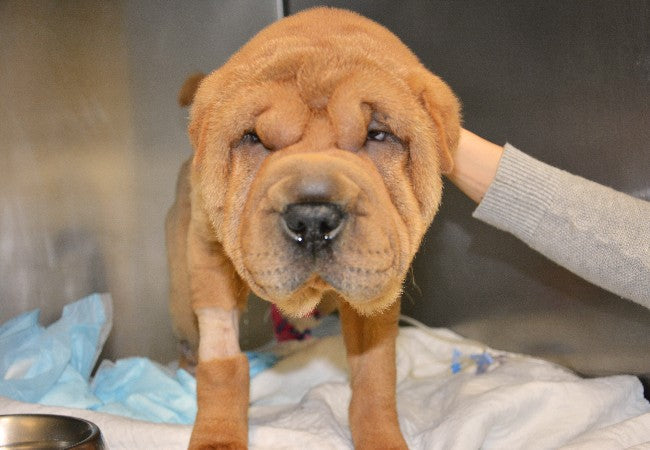
Familial Shar‑Pei Fever, also known as SPAID—a hereditary autoinflammatory syndrome—is unique to Chinese Shar‑Pei dogs. It manifests as recurrent, spiked fevers and inflammation, primarily affecting the hocks (ankles), muzzle, and occasionally other body systems. Without intervention, it can progress to systemic amyloidosis, leading to kidney and liver failure. Early recognition and management are essential. 🩺
💡 Causes & Pathogenesis
- Genetic mutation in the HAS2 gene leads to overproduction of hyaluronic acid—creating deep wrinkles that provoke an exaggerated immune response.
- Breakdown products of hyaluronan stimulate inflammatory cytokines (IL‑1β, IL‑6), triggering fever episodes, arthritis, and vesicular skin lesions.
- The syndrome is autosomal recessive—about 23–25% of Shar‑Peis are affected, with ~25% being carriers.
🚨 Clinical Signs
- High fever (103–107°F/39.4–41.7°C) lasting 12–36 hrs, often resolving spontaneously.
- Swollen, painful hocks (“Swollen Hock Syndrome”), which may extend to muzzle, joints, or abdomen.
- Other signs: lethargy, anorexia, vomiting, diarrhea, tachypnea, and back pain during episodes.
- Chronic inflammation can prompt amyloid deposits—kidneys, liver, spleen—resulting in proteinuria and organ failure by age six in some.
🔬 Diagnostic Approach
- Diagnosis is clinical, with evident fever episodes and hock swelling in Shar‑Peis, ruled out infections.
- Genetic testing (e.g., Cornell SPAID assay) identifies copy number variants predicting risk.
- Baseline labs: CBC, chemistry, urinalysis (especially protein: creatinine ratio), imaging for organ health.
- Biopsies (e.g., renal Congo red) confirm amyloidosis in suspected organ failure.
🛠 Treatment & Management
- Supportive care: NSAIDs (e.g., meloxicam, carprofen) and fluids during flares; pain relief and mobility support.
- Colchicine therapy: 0.025–0.03 mg/kg once or twice daily to reduce flares and amyloid buildup.
- Steroids: short-term low-dose glucocorticoids for severe skin or joint signs.
- Advanced support: antibiotics, plasma/albumin transfusions, oxygen, and intensive care during severe episodes or organ dysfunction.
- Monitoring: annual urine screening for protein loss; regular organ health checks.
📈 Prognosis
- Early colchicine use improves quality of life and delays amyloidosis-related death.
- Untreated dogs may succumb between 2–6 years of age due to progressive organ failure.
🛡 Genetics & Breeding Advice
- Perform SPAID genetic testing for all breeding Shar‑Peis; avoid breeding carriers or affected dogs.
- Educate breeders on the link between skin folds and inflammation to inform selective breeding strategies.
- Maintain population diversity—avoid excessive selection for extreme wrinkles.
🔧 Tools & Support Services
- Ask A Vet App: 24/7 help with fever tracking, treatment guidance, and colchicine dosing 📱
✅ Final Thoughts
Familial Shar‑Pei fever is a breed-specific inflammatory disease with serious implications, but timely colchicine therapy, supportive care, and genetic screening can significantly reduce risks. By avoiding breeding of carriers and affected dogs, and utilizing tools like Ask AVet, safeguard their Shar‑Pei’s health and legacy in 2025 and beyond. 🐾❤️
Download the Ask A Vet app today for fever episode coaching, medication reminders, and ongoing health support. 📱💡