


Veterinary Guide to Fibrosarcoma in Dogs (2025)🐶
Dans cet article
Veterinary Guide to Fibrosarcoma in Dogs (2025)🐶
By Dr. Duncan Houston BVSc
🔍 Introduction
Fibrosarcoma is a malignant tumor originating from connective tissue fibroblasts. It typically forms firm, often ulcerated masses beneath the skin, in limbs, trunk, mouth, or nasal regions. These tumors grow slowly but can aggressively invade local tissues. 👁️
💡 What Is Fibrosarcoma?
- Soft-tissue sarcoma arising from fibroblasts—benign-looking on histology but deeply invasive.
- Occurs most often under the skin of the limbs and trunk; can also affect the jaw, nasal passages, or bone.
⚠️ Causes & Risk Factors
- Cause is multifactorial—includes chronic irritation, trauma, injections, or implants.
- Predisposed breeds: Gordon Setters, Irish Wolfhounds, Brittany Spaniels, Golden Retrievers, Dobermans, likely due to genetics and size.
- Older dogs are more commonly affected; onset around ~10 years is typical.
🚨 Clinical Signs
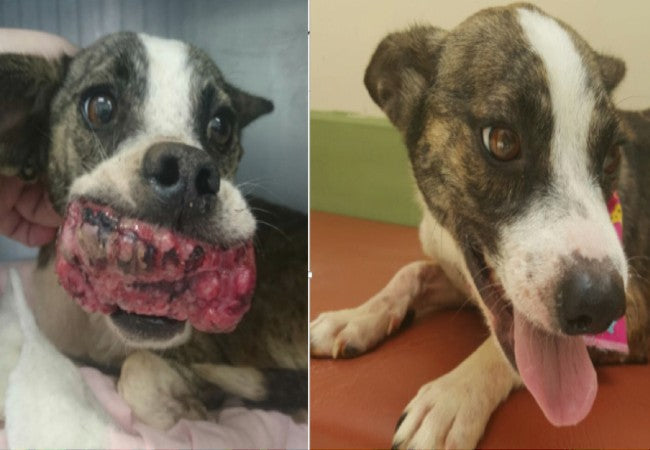
- Firm, often slowly enlarging subcutaneous lump; may ulcerate or bleed.
- Oral fibrosarcoma: drooling, bleeding, bad breath, difficulty chewing/swallowing.
- Nasal form: asymmetry, sneezing, nasal discharge, breathing changes.
- Bone involvement may cause lameness or fractures.
🔬 Diagnosis
- Evaluate lumps with CBC, chemistry, urinalysis, imaging (X‑ray, ultrasound, CT/MRI).
- Final diagnosis via biopsy and histopathology; surgical biopsy preferred over fine‑needle aspiration.
- Histologic grade (mitotic rate, cellular atypia) guides prognosis and treatment.
🛠 Treatment Options
- Surgery: gold-standard—wide-margin excision; may require amputation or jaw/maxilla removal in oral cases.
- Radiation: adjunctive for incomplete resections—improves local control, especially in oral fibrosarcomas.
- Chemotherapy: limited value; occasionally for high-grade or metastatic disease.
📈 Prognosis & Follow‑Up
- Locally invasive—recurs in 32–57% even after surgery.
- Low‑intermediate grade tumors have ~10% metastasis risk; high‑grade tumors are more aggressive.
- Median survival with surgery + radiation: ≈16–19 months; varies by tumor location, grade, and completeness of excision.
🛡 Risk Reduction
- Use careful injection protocols—rotate sites and avoid adjuvant-related inflammation.
- Monitor and biopsy any persistent subcutaneous lump > 2 cm or present > 1 month.
- Consider early referral if the tumor is on the limb, mouth, or near critical structures.
🔧 Tools & Support Services
- Ask A Vet App: 24/7 help with lump evaluation, staging advice, surgery vs radiation decisions 📱
✅ Final Thoughts
Although fibrosarcoma is locally aggressive and recurring, early detection and wide-margin surgery—boosted by radiation—offer dogs the best chance for prolonged survival. Owners can also reduce risk by cautious injection practices and diligent monitoring. Utilizing tools like Ask A Vet, comprehensive care into 2025 and beyond. 🐾❤️
Download the Ask A Vet app today for expert support in lump evaluation, staging decisions, and follow-up planning. 📱💡