


Veterinary Guide to Histiocytoma in Dogs 2025 🩺🐶
Dans cet article
Veterinary Guide to Histiocytoma in Dogs 2025 🩺🐶
By Dr. Duncan Houston BVSc
🧬 What Is a Histiocytoma?
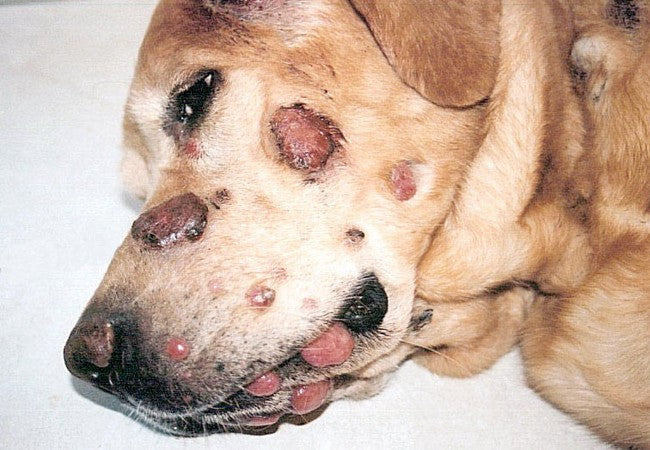
Histiocytomas—also known as “button tumors”—are benign skin growths originating from Langerhans cells in the epidermis. They are common in dogs under 3 years old, often appearing suddenly on the head, limbs, or ears. Usually hairless, pink/red, smooth, and dome-shaped, though ulceration can occur.
👥 Who Gets Them?
- Primarily young dogs (<3 yrs), though they can appear in older pets.
- Predisposed breeds: Boxers, Boston Terriers, Labs, Bulldogs, Dachshunds, Shar‑Peis (multiple lesions).
- Rare cases may show multiple lesions or spread, and murky cases may mimic Langerhans cell histiocytosis.
👀 Clinical Appearance & Signs
- Rapid onset: bump appears within days to weeks.
- Often 0.5–2.5 cm in size, smooth, raised, red lump; ulceration is common if irritated.
- Usually not painful or itchy, unless inflamed or infected.
- Occasionally, draining, bleeding, or infected lesions prompt veterinary attention.
🔍 Why They Matter
Although benign, histiocytomas may resemble serious skin tumors such as mast cell tumors or lymphomas. Accurate diagnosis is essential because:
- They usually regress, but if misdiagnosed, serious tumors may be missed.
- Ulcerated lesions risk infection, bleeding, and discomfort.
- Uncommon aggressive variants require early treatment.
🧪 Diagnosis Workflow
- Physical exam & history: look for solitary, button-like lesions in young dogs.
- Cytology (FNA): quick and inexpensive—reveals round histiocytic cells.
- Biopsy/histopathology: recommended if unfamiliar, multiple, persistent (>2–3 months), or ulcerated.
- Monitoring: Even without biopsy, watch for regression over weeks.
⌛ Natural Regression & Timeline
Most histiocytomas spontaneously regress within **2–3 months** due to immune response—CD8 T-cell infiltration and apoptosis of tumor cells. Even ulcerated lesions often heal well. Rare persistent cases may take up to 10 months or require intervention.
🩺 Treatment Decisions
- Active monitoring: first-line for typical lesions—no treatment needed unless complications arise.
- Surgical removal: for lesions that ulcerate heavily, are infected, bleed, or persist beyond 2–3 months.
- Cryotherapy: freezing the lesion—another option for small lesions.
- No corticosteroids: these suppress immune regression.
🏡 Home Care Essentials
- Prevent scratching/licking: use e-collar when needed.
- Clean with mild saline if ulcerated or draining.
- Observe for changes: size, color, swelling.
- Keep the lesion dry and the dog calm.
- Maintain a follow-up schedule to confirm regression or plan removal.
🧸 Ask A Vet Telehealth Support
- Remote cytology review: show FNA images for expert cytology interpretation.
- Follow-up guidance: tips for monitoring growth, cleaning, and when surgery is needed.
🎓 Case Spotlight: “Penny” the Pug
Penny, a 9‑month‑old Pug, developed a 1 cm red bump on her cheek. FNA confirmed histiocytoma. She was monitored, kept from licking with a soft collar, and the lesion regressed fully in 5 weeks. Repeat cytology confirmed resolution! Owner notes: “Penny’s back to being her smiley self!” 🥰
🧩 When to Be Concerned
- Persistent tumor >3 months
- Multiple lesions in older dogs (possible progressive histiocytosis)
- Enlarged lymph nodes or systemic signs—evaluate for histiocytic sarcoma
- Ulceration + bleeding/infection not responding to conservative care
📊 Prognosis
- Simple histiocytomas: excellent prognosis—~95% resolve fully
- Persistent types: may need excision, but still benign in most cases
- Rare aggressive forms: poor prognosis, require early biopsy and specialist care
🔚 Summary Takeaways
- Histiocytomas are benign, usually in young dogs.
- Spontaneous regression is common and rapid.
- Diagnosis via FNA; biopsy if unusual or persistent.
- Surgery only for problems or non-regression.
- Home care and Ask A Vet telehealth support enhance recovery.
Dr Duncan Houston BVSc, founder of Ask A Vet. Download the Ask A Vet app for remote skin-care guidance—helping your pup feel better, faster! 🐶❤️