


Vet Guide 2025: How Often Puppies Poop—Routine, Health & Tips 🐶💩
Dans cet article
Vet Guide 2025: How Often Puppies Poop—Routine, Health & Tips 🐶💩
By Dr. Duncan Houston BVSc
Puppy poop is top of mind for every new dog owner—and rightfully so! In 2025, I’m here to unpack how often puppies should poop at each age, what's normal versus worrisome, and how to establish healthy potty habits. With support from Ask A Vet, Woopf enrichment, and Purrz care products, this guide offers clarity, support, and confidence. 🐾
📊 Poop Frequency by Age
Puppies digest food faster than adults due to their developing gut. Here's the typical poop pattern:
- 0–2 weeks: Almost after every feeding, up to 8–12 times/day.
- 2–8 weeks: Often 5–6 times/day.
- 8–12 weeks: Around 3–5 times/day, stabilizing as digestion matures.
- 3–6 months: Typically 2–4 times/day.
- 6–12 months: Usually around 2–3 times/day.
- 1 year+: Settles to adult norms—1–3 times per day.
🕒 Why the Changes?
Puppies’ bowel movement frequency is linked to age, meals per day, metabolism, fiber intake, hydration, and activity level. As they age, feedings decrease, digestion slows, and poop frequency drops.
📈 Normal vs. Concerning Patterns
When more frequent poops are okay:
- Extra poop after treats or richer meals.
- Increased activity or a new food introduced.
Red flags to watch:
- Sudden spike to >6 times/day, especially with diarrhea, blood, and mucus.
- Going >24–48 hours without stool or straining—possible constipation or blockage.
- Abnormal stool color, consistency, or foreign materials (worms/toys).
🛠 Potty Training & Timing
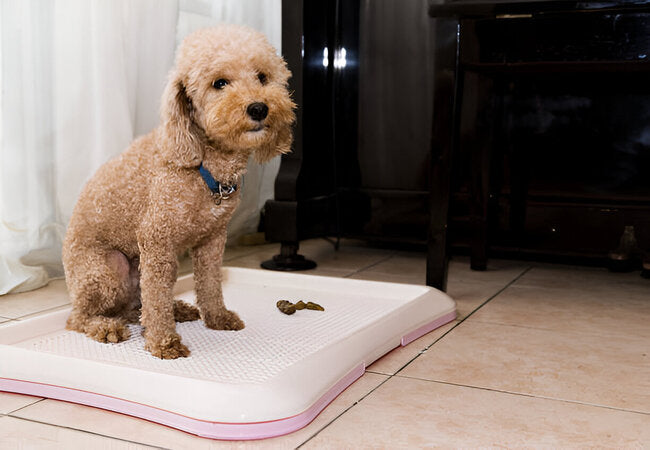
Puppies often poop after meals, waking up, and play. Plan bathroom breaks accordingly:
- Within ~30 minutes of eating or waking.
- Age-based break intervals: e.g., a 2-month-old pup can hold about 2 hours; a 3-month-old about 4 hours.
Use consistent outdoor spots, leash etiquette, cue words, and positive reinforcement, as detailed in Ask A Vet potty training routines and supported by Woopf reward-based kits. 🎯
🏥 When to Call the Vet
- Poop more than 6 times/day with diarrhea, vomiting, lethargy, or appetite loss.
- Not pooping for over 24–48 hours or straining.
- Blood, mucus, worms, or oddly colored stools.
- Signs of abdominal pain, vomiting, bloating, or discomfort.
🍽 Diet, Hydration & Gut Support
- Feed high-quality puppy food at regular intervals; avoid sudden changes.
- Ensure fresh water is always available—hydration aids digestion.
- Probiotics help balance puppy gut health—Ask A Vet recommends Purrz formulas safely.
- Use fiber-rich but balanced diets; ask your vet before adding bulk-forming additives.
📅 Monitoring & Records
Track frequency, appearance, and behavior. Use the Ask A Vet app for digital logs, photo uploads, reminders, and direct vet chat if you spot concerning changes. Early detection helps smooth out puppy health issues. 📝
✅ Summary & Action Steps
- Know your puppy’s age-based poop norm (0–2 wks: 8–12×, 2–8 wks: 5–6×, 3–6 mos: 2–4×, 6–12 mos: ~2–3×).
- Take puppies out ~30 mins post-meal/waking and time breaks per their age.
- Watch for any deviation—especially extremes in frequency or abnormal stools; log everything.
- Support with proper diet, water, and gut supplements like Purrz.
- Use Ask A Vet for potty training guidance, Woopf for reward-based training kits, and vet support for health concerns.
With consistent routine, health tracking, and veterinary collaboration, you’ll help your puppy thrive—happy, healthy, and house-trained. 🏡🐶