


By Dr Duncan Houston
Quick Answer
Cats can look as though they are smiling, especially when their face and eyes are relaxed. However, an upturned mouth is not a reliable equivalent of a human smile. Read the whole cat: a comfortable body, voluntary approach, normal everyday habits and the freedom to leave provide much better context.
What a happy-looking face can tell you
A resting cat's mouth shape may simply reflect its individual appearance, viewing angle or fur pattern. It is reasonable to enjoy that expression without assuming it proves a particular emotion. A photograph captures a fraction of a second; behaviour before and after the photograph matters more.
Compare your cat with its own usual behaviour. Does it settle near you by choice? Does it move comfortably between resting places, play in its usual way and eat normally? An expression is more reassuring when those everyday patterns are also normal. A cat that looks sweet in a picture but has stopped eating needs health attention.
Slow blinking: a useful social signal
Research found that cats narrowed their eyes more following human slow-blink interactions and were more likely to approach an unfamiliar person's hand after that interaction. This supports slow blinking as a positive form of communication, without proving that every blink means the same thing. See the published cat eye-narrowing study.
Try sitting comfortably a little away from your cat, soften your gaze and close your eyes slowly before looking slightly aside. Then pause. If your cat stays relaxed, you can leave the interaction there. It does not need to blink back, approach or accept touch for the moment to be successful.
Expressions that can be mistaken for a smile
| Expression and context | What it may mean | A helpful response |
|---|---|---|
| Soft eyes with a loose resting posture | Relaxation, particularly when other habits are normal | Allow quiet company and let the cat initiate contact |
| A brief open mouth after carefully sniffing something | A scent-processing response called flehmen | Observe without interrupting; breathing should remain comfortable |
| Exposed teeth, tense muscles, flattened ears or hissing | A defensive warning rather than amusement | Stop approaching and provide space |
| New squinting, drooling, pawing at the mouth or difficulty eating | Possible eye, dental or other pain | Arrange prompt veterinary assessment |
| Open-mouth breathing, marked breathing effort or collapse | A potential emergency | Contact an emergency vet immediately and minimise handling |
Why cats sometimes hold their mouth open
During flehmen, a cat briefly holds its mouth partly open after investigating an interesting smell. This helps chemical information reach a specialised scent-sensing system. The pose can look comical, but it is not evidence of disgust or laughter. A veterinary explanation of the feline flehmen response describes this normal behaviour.
Do not label prolonged mouth opening or abnormal breathing as flehmen. Context matters: a brief pause after sniffing followed by completely normal behaviour differs from a cat struggling to breathe while resting.
Make friendly interactions easy
- Offer a choice. Sit nearby without reaching into a hiding place or blocking an exit.
- Watch the whole body. Look for loose posture and a voluntary approach before offering contact.
- Keep touch brief. If the cat enjoys stroking around the cheeks, pause after a few strokes and see whether it asks for more.
- Respect a change. Turning away, increasing tension or tail lashing is a reason to stop.
- Support the rest of the day. Provide quiet sleep, opportunities to play and reliable access to food, water and litter facilities.
Common interpretation mistakes
Purring can occur with stress or pain as well as contentment, so it does not cancel out worrying signs. A cat lying on its back may feel safe without wanting its belly touched. Cats Protection's body-language guidance recommends reading signals in context.
Avoid staring to obtain a reaction, restraining a cat for a smiling photograph or repeatedly testing its tolerance. Children can practise spotting when the cat chooses to approach and when it chooses to leave. Rewarding calm observation helps protect the relationship.
Frequently asked questions
Does a slow blink always mean love?
It can be part of a comfortable social interaction. It is not a precise translation of a human sentence or a guarantee that touch is welcome.
Why does my cat never look smiley?
Facial appearance varies. Your cat can be comfortable and affectionate without the mouth shape you associate with a smile.
Is a sleeping cat smiling?
You cannot determine its experience from a still expression. Let it rest and judge welfare from its overall behaviour when awake.
Should I worry about a new facial expression?
A sudden persistent change, especially with squinting, drooling, poor appetite or unusual breathing, deserves veterinary advice.
Enjoy the expression, respect the message
A happy-looking face is a lovely moment. The stronger foundation for understanding your cat is noticing its ordinary routines and allowing it to choose how it interacts with you.
Explore ASK A VET™ for more practical guidance on understanding cats and recognising changes that deserve veterinary attention.
This article is general veterinary education and does not diagnose or treat an individual animal. Always confirm medication names, doses and interactions with the veterinarian who knows your pet.
If your animal is struggling to breathe, collapsed, bleeding heavily, seizing, or has eaten something toxic, contact your vet or the nearest emergency clinic now.
Animal Poisons Helpline (AU) 1300 869 738 · Animal Poisons Helpline (NZ) 0800 869 738 · ASPCA Animal Poison Control (US) (888) 426-4435
More from Ask A Vet
The GPS pet tracker logs live location and activity trends, the smart pet ID tag is a QR scan or NFC tap on any phone with a free profile you can update anytime, and the Ask A Vet app keeps your pet's records and routines together.
 Dog & Cat GPS Tracker for Their CollarView tracker
The ASK A VET™ Tracker logs live location and activity trends, so a change in routine never goes unnoticed.
 QR Code Dog & Cat ID Tag with NFC, HangingView ID Tag
The ASK A VET™ Smart ID Tag is a QR scan or NFC tap on any phone, no app needed, with a free profile you can update anytime.
 Talk to a Vet Online: The Ask A Vet AppExplore the app
Ask questions, speak with vets, and keep your pet's records and routines together with Ask A Vet.
- Body Language
- Cat Behavior
- Cat Welfare
- Cats
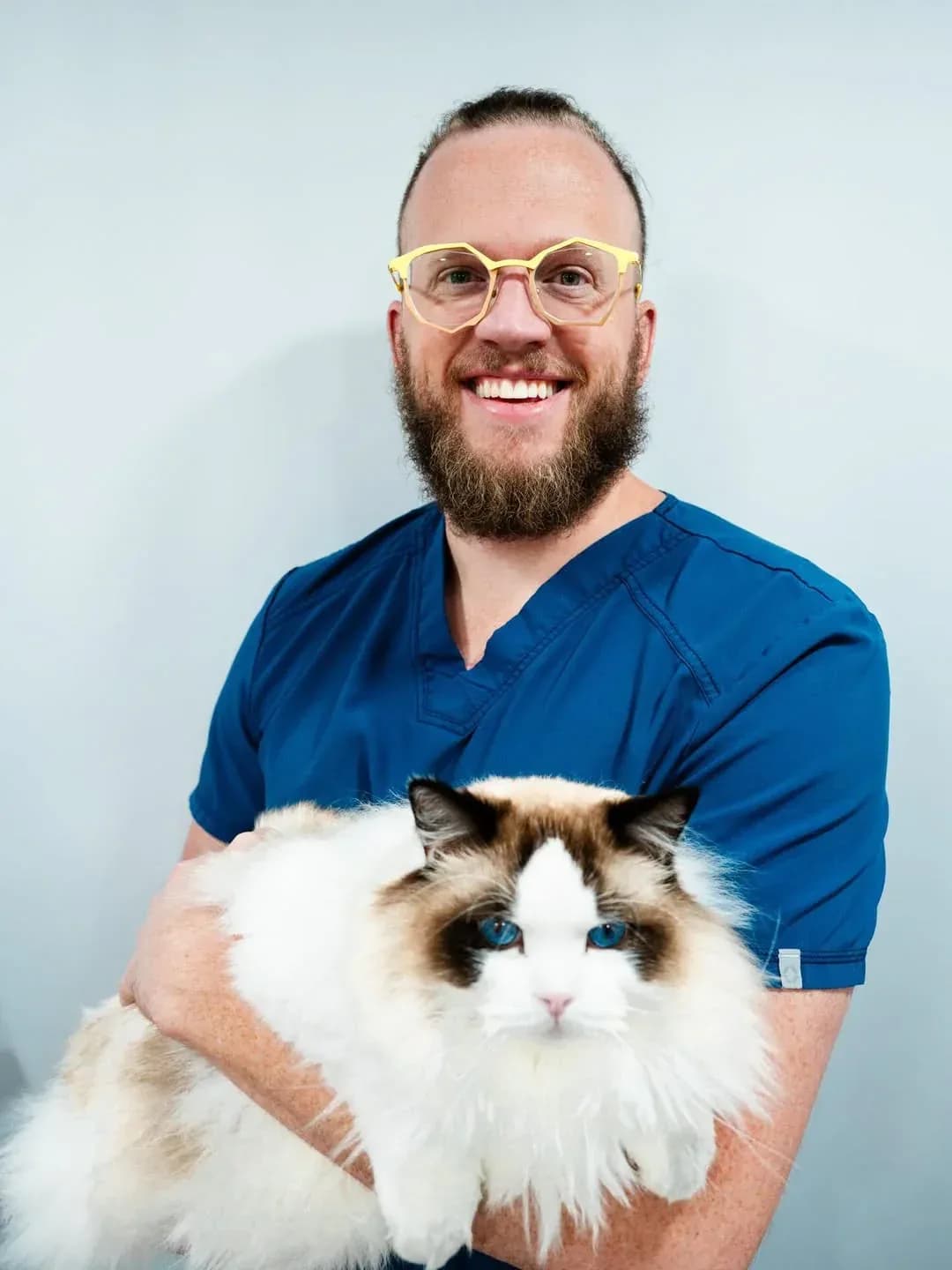
Ask A Vet articles are written by Dr Duncan Houston BVSc, a practising veterinarian, unless another author is named in the byline.