


By Dr Duncan Houston
Scratched furniture can be frustrating, and fear of being scratched deserves a practical response. Understanding what declawing involves is an essential first step before considering it.
Scratching is normal feline behaviour. A useful care plan protects people and belongings while allowing the cat to stretch, mark and maintain their claws.
Quick Answer
Declawing usually removes the last bone of each operated toe together with its claw. Veterinary welfare organisations oppose routine elective declawing because it removes healthy tissue, causes pain and can have lasting complications. Laws vary by location, with several jurisdictions allowing these procedures only for a medical problem affecting the cat; use scratching resources, appropriate handling and nail care to manage everyday concerns.
What does the surgery involve?
Onychectomy is an amputation of the claw-bearing end of the toe, rather than trimming the exposed nail. A laser changes the surgical instrument, not the tissue that must be removed. The Feline Veterinary Medical Association's owner guidance explains this anatomy and opposes elective declawing.
A painful tumour, severe injury or persistent infection affecting a digit may justify removing diseased tissue. That therapeutic decision is different from operating on healthy toes to prevent damage to a sofa.
Why are there welfare concerns?
The Canadian Veterinary Medical Association's position identifies immediate pain and surgical risks including bleeding and infection, alongside possible chronic pain and orthopaedic consequences. Some cats do not show obvious long-term problems; others do. It is inaccurate to promise a pain-free result or to claim every declawed cat will develop the same behavioural condition.
Pain can affect movement, handling tolerance and toileting. The ethical concern is substantial: a healthy cat undergoes irreversible surgery primarily for human convenience despite the availability of less invasive approaches.
Is declawing legal where you live?
Check current statutes and your local veterinary regulator before relying on an online list. National, state, provincial and municipal rules can differ, and a professional association's position is not itself legislation.
| Verified example | What the law addresses | Practical meaning |
|---|---|---|
| New York | Restricts declawing and related procedures to therapeutic purposes | Convenience or cosmetic reasons do not qualify |
| Massachusetts | Permits declawing only within a defined therapeutic exception and veterinary requirements | Ordinary nail trimming and temporary nail caps are excluded from its declawing definition |
| California | State law requires a therapeutic purpose for specified claw-removal and function-impairing procedures | It is no longer accurate to describe restrictions only as city ordinances |
These are selected examples, not a complete international inventory. Read the primary provisions for New York, Massachusetts and California. A therapeutic exception concerns the cat's medical need and does not automatically cover a person's preference or health concern.
Build an effective scratching plan
- Notice whether your cat chooses vertical, horizontal or angled surfaces.
- Offer a stable scratcher with a texture they use and enough space to stretch.
- Put it beside the affected furniture or a favourite sleeping spot, rather than hiding it in an unused room.
- Reward voluntary use and protect furniture with a safe fitted cover while the habit develops.
- Review household stress and resource access if scratching suddenly increases.
FelineVMA's practical scratching guidance supports matching surface, location and enrichment to the cat. Punishment can add fear without teaching where scratching is welcome.
What about trims, nail caps and human safety?
Ask the veterinary team to demonstrate a gentle nail trim that avoids the sensitive quick. Work in short sessions. Temporary nail caps may suit some cats with professional guidance, but they require correct sizing, monitoring and replacement; they are not maintenance-free.
Use toys rather than hands for play, supervise children and give cats an escape route. If someone has a medical condition that increases infection risk, ask their healthcare professional and the cat's vet for a coordinated prevention plan. Declawing does not prevent bites or replace safe handling.
When should an already declawed cat see a vet?
Arrange an examination for limping, paw licking, reduced jumping, new handling aggression or litter-box avoidance. These signs have several possible causes, including joint disease and urinary problems, so the old surgery should not become the only explanation considered.
Fresh bleeding, marked swelling, severe pain, weakness or difficulty breathing needs urgent advice. Never give human painkillers. Use accessible resting places and comfortable litter arrangements while following the vet's recommendations.
Common mistakes to avoid
- Thinking laser declawing preserves the toe.
- Assuming a legal procedure must be appropriate for a healthy cat.
- Treating tendon surgery as a simple welfare-safe workaround.
- Blaming a cat with pain-related behaviour or avoiding adoption solely because they were previously declawed.
Frequently Asked Questions
Is declawing the same as cutting nails?
No. A trim shortens the nail tip; declawing removes the claw-bearing bone.
Can it ever be medically necessary?
Yes. A veterinarian may recommend digit surgery for a serious condition affecting the cat, subject to local law and the individual diagnosis.
Does a declawed cat always have chronic pain?
No single outcome applies to every cat. Watch for subtle changes and seek assessment rather than assuming comfort or inevitable disability.
Can furniture scratching improve without surgery?
Often it can. Suitable scratching surfaces, placement, rewards, nail care and attention to stress form the starting plan.
Protect comfort and normal behaviour
Discuss the problem you are trying to solve with your veterinary team. A tailored plan can protect your household while preserving your cat's ability to behave naturally.
For practical educational support with feline welfare and behaviour, explore ASK A VET™.
This article is general veterinary education and does not diagnose or treat an individual animal. Always confirm medication names, doses and interactions with the veterinarian who knows your pet.
If your animal is struggling to breathe, collapsed, bleeding heavily, seizing, or has eaten something toxic, contact your vet or the nearest emergency clinic now.
Animal Poisons Helpline (AU) 1300 869 738 · Animal Poisons Helpline (NZ) 0800 869 738 · ASPCA Animal Poison Control (US) (888) 426-4435
More from Ask A Vet
For everyday pet care, one scan or tap of the smart pet ID tag opens your pet's free profile on any phone, no app needed; the GPS pet tracker logs live location and activity trends; and the Ask A Vet app keeps your pet's records and routines together.
 Hanging QR & NFC Pet ID TagView ID Tag
The ASK A VET™ Smart ID Tag is a QR scan or NFC tap on any phone, no app needed, with a free profile you can update anytime.
 GPS Pet Tracker for Dogs and CatsView tracker
The ASK A VET™ Tracker logs live location and activity trends, so a change in routine never goes unnoticed.
 Talk to a Vet Online: The Ask A Vet AppExplore the app
Ask questions, speak with vets, and keep your pet's records and routines together with Ask A Vet.
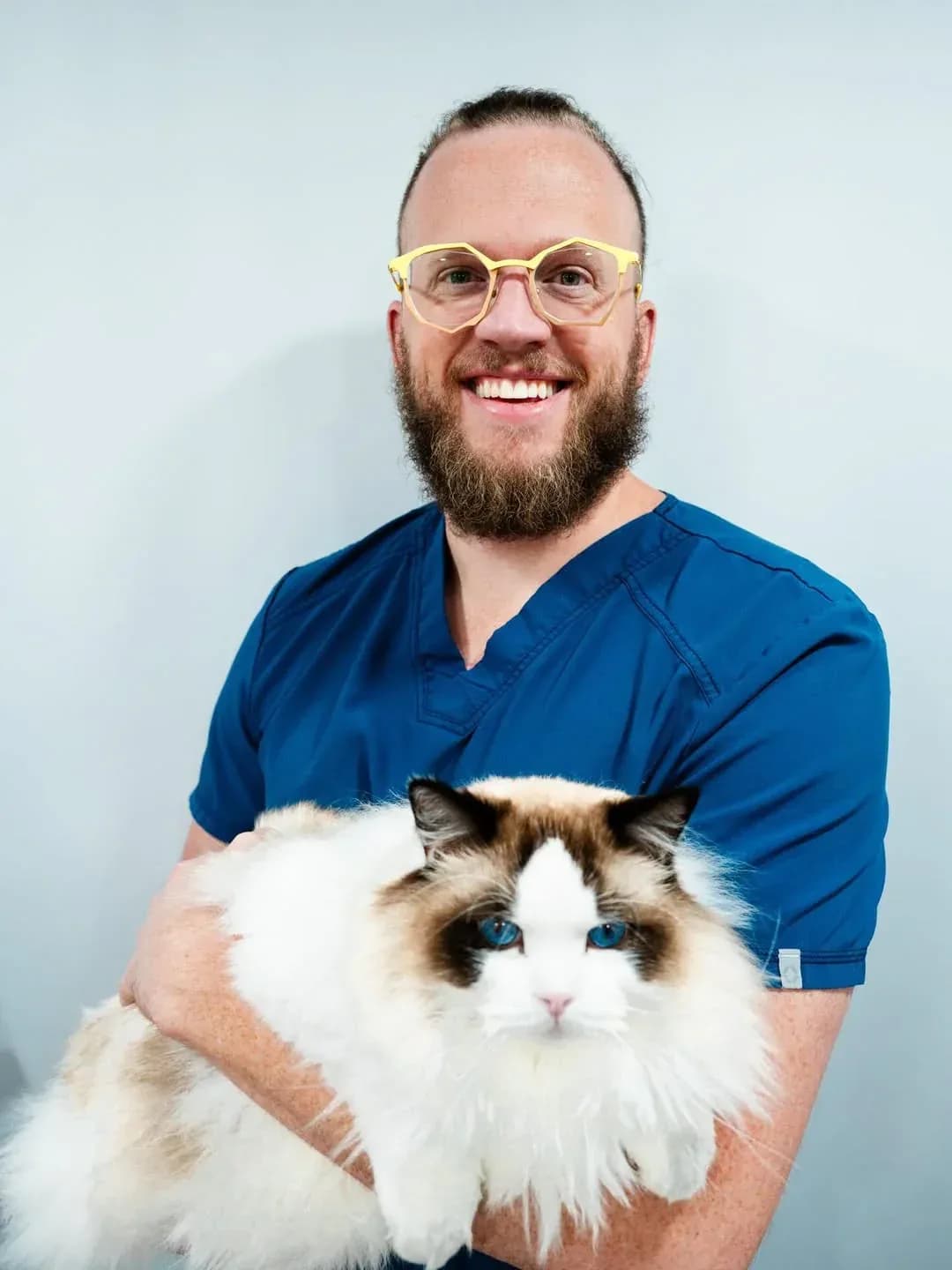
Ask A Vet articles are written by Dr Duncan Houston BVSc, a practising veterinarian, unless another author is named in the byline.