


A familiar supplement brand can make the choice feel straightforward. But a bottle for joint health, a probiotic and a liver supplement answer different questions, and none tells you why your cat is limping, vomiting or eating less.
The useful starting point is the problem you and your veterinarian are trying to address. Then check the exact feline product, what is in it and whether its evidence fits that goal.
Quick Answer
Nutramax makes several products labelled for cats, including Cosequin, Dasuquin, Proviable, Welactin, Denamarin, Denosyl and Solliquin. There is no single best Nutramax supplement for every cat, and a product's ingredients or marketing category do not prove that it will improve a particular condition. Choose with your veterinarian rather than using supplements to postpone diagnosis or replace treatment.
If your cat is straining to urinate, struggling to breathe, collapsing or has possibly swallowed a harmful product, seek urgent veterinary care instead of trying a supplement.
Which Nutramax products are made for cats?
The manufacturer's species-specific product directory is a starting point for checking the range. The descriptions below concern identified US feline products, not every version sold under the same brand. Formulas and availability can differ between countries and change over time.
Cosequin and Dasuquin: joint-supplement brands
The standard Cosequin cat sprinkle capsule lists glucosamine, chondroitin and manganese. The current Dasuquin cat sprinkle capsule lists glucosamine, chondroitin, avocado/soybean unsaponifiables (ASU), Boswellia serrata extract and decaffeinated green tea extract. Dasuquin Advanced is a separate formulation.
Those differences do not establish a rule that Cosequin treats mild arthritis while Dasuquin treats severe arthritis. In a placebo-controlled trial involving 59 cats with painful degenerative joint disease, the tested glucosamine/chondroitin supplement, identified as Dasuquin, did not demonstrate pain relief compared with placebo. That was not a head-to-head brand comparison and does not test every current formula.
If your cat hesitates before jumping, struggles to groom or avoids the litter tray's high sides, arrange a veterinary assessment. A supplement choice is not a pain-management plan.
Proviable: probiotic products
The Proviable cat kit contains probiotic capsules with prebiotics, plus a separate paste containing kaolin and pectin. Capsules, kits and different product versions should not be treated as interchangeable.
Ask which formulation is appropriate and what problem it is intended to address. A label mentioning digestive health does not show that a product will treat every cause of diarrhoea, food allergy or vomiting. Continuing signs need reassessment, not an indefinite course of a gut supplement.
Denamarin and Denosyl: different liver-support formulations
Denamarin contains S-adenosylmethionine, usually shortened to SAMe, and silybin. Denosyl contains SAMe; it is not the same two-ingredient formula.
These products should be considered within a veterinarian's plan for a diagnosed problem. They do not identify the cause of abnormal liver tests or replace investigation and treatment. Claims about a SAMe product and cognition in dogs should not be presented as established benefits in cats.
Ask how to give the specific formulation. Instructions for a sprinkle capsule do not apply to every tablet, and a tablet should not automatically be crushed into food.
Welactin: a feline omega-3 product
The Welactin feline liquid supplies the omega-3 fatty acids EPA and DHA. A cat-labelled liquid is not automatically interchangeable with a canine or human fish-oil product.
The amount already present in your cat's food matters when discussing an additional oil. Ask what benefit is being sought and how it will be assessed rather than assuming that one supplement treats skin, joint, kidney and heart problems equally well.
Solliquin: a behavioural supplement
The Solliquin soft chew labelled for small dogs and cats lists L-theanine, magnolia and phellodendron extracts, and whey protein concentrate. This is not the same ingredient list as every other calming chew.
For a cat that is hiding, reacting aggressively or struggling with a household change, discuss both health and environment. A supplement cannot remove competition over a litter tray or make repeated frightening encounters acceptable. Its role, if any, belongs within that broader plan.
Imuquin: look beyond an immune-health claim
Imuquin is marketed for immune health, including a feline product. That category does not establish that every older cat, or every cat under stress, needs it. Ask what specific indication supports its use in your cat and whether adding it would duplicate nutrients or other ingredients already being given.
What about cranberry products?
The manufacturer identifies Crananidin as a product for dogs. Do not assume a dog urinary product is suitable for a cat or use cranberry as a home treatment for urinary signs.
Repeated straining, frequent unsuccessful litter-tray visits or difficulty passing urine need urgent veterinary attention. Do not wait to see whether a supplement helps.
How much confidence should you put in a supplement claim?
Separate three questions: does the label accurately describe the ingredients, has that exact product been studied, and did the study show a meaningful benefit in cats like yours? A plausible ingredient or a study in dogs does not answer all three.
A manufacturer's page is useful for checking a formulation. It is not independent proof of effectiveness. Equally, one negative study does not prove that all products in a broad category are useless. The practical decision is whether there is a clear reason to try this particular product without delaying better-supported care.
In the US, the human dietary-supplement framework does not simply extend to animal products. The FDA explains that animal products are regulated according to factors including their composition and intended use. The word “supplement” is not evidence that a product has been approved as a treatment for your cat's illness.
When symptoms matter more than the shopping decision
- No current symptoms: ask whether there is a specific need before adding a product for prevention or general wellness.
- A change in movement, behaviour, appetite or digestion: contact your veterinary practice to decide what assessment is needed. Do not assume the change is ageing or stress.
- Signs are worsening despite an existing plan: report the change rather than adding another supplement or changing several products at once.
When to seek urgent care
Seek urgent veterinary help for difficulty urinating, collapse, breathing difficulty, severe pain, a major injury or suspected poisoning. The Cornell emergency service identifies these as reasons for urgent assessment.
If your cat stops eating, contact your veterinarian promptly. Loss of appetite can have serious medical causes; don't spend days trying powders or new flavours before asking for help.
A practical plan for choosing and reviewing a product
- Bring the full label. Include the product name, ingredients, formulation and country of purchase, along with everything else your cat receives.
- Agree on one goal. For example, describe a specific movement your cat struggles with or a recurring digestive sign. The goal helps you judge whether the overall care plan is working.
- Check the whole patient. Mention age, pregnancy, chronic disease, dietary restrictions, medicines and any planned procedure. Do not assume a shared brand means products can safely be combined.
- Confirm administration and a review point. Follow the veterinarian's advice for the exact product. There is no single trial period or dose that suits all these unrelated formulations.
- Record changes. Note appetite, stool, comfort and behaviour as relevant. Report new or worsening signs and ask what to do before continuing a suspected problem product.
Keep the packaging and purchase from a source where the exact product and expiry information are clear. If your cat refuses food containing a supplement, tell the veterinarian rather than letting the attempt interfere with eating.
Common mistakes to avoid
- Choosing the product with the longest ingredient list as though it must work better.
- Using a dog product because a similarly named cat product exists.
- Combining supplements without checking duplicated ingredients.
- Treating a temporary improvement as proof that the supplement caused it.
- Replacing prescribed care, or waiting through worsening symptoms, while trying a supplement.
What helps alongside a veterinary plan?
Keep everyday care manageable: a suitable complete diet, easy access to food and water, comfortable resting places and litter trays your cat can enter comfortably. For a cat with reduced mobility, a stable step to a favourite resting place may be more useful than another bottle.
Discuss weight and muscle condition rather than assuming every cat needs fewer calories or a low-carbohydrate diet. Keep behavioural changes in context too: a new pet, moved resources or a painful movement can change how a cat uses the home.
Frequently asked questions
Which Nutramax product is best for my cat?
There is no universal best choice. Start with the problem, diagnosis and treatment goal, then discuss whether a specific feline product adds enough value to the plan.
Can I give more than one Nutramax supplement?
Do not assume the combination is suitable because the products share a manufacturer. Have the veterinarian review all ingredients, medicines and dietary supplements together.
Are Denamarin and Denosyl the same?
No. The products described here contain different ingredient combinations: Denamarin has SAMe and silybin, while Denosyl has SAMe. Ask before substituting one for the other.
Can a supplement replace arthritis pain treatment?
No. A cat showing discomfort needs a veterinary pain assessment and a suitable care plan. Joint-supplement marketing does not establish dependable pain relief.
How long should I wait for a result?
Agree on a review point for the specific condition and product. Do not apply one waiting period to all supplements, and do not wait through worsening pain, poor appetite or urinary difficulty.
Choose for a reason, then reassess
A useful supplement decision has a clear purpose, an exact product and a plan for judging the result. If the purpose is unclear or your cat is getting worse, the next step is a veterinary conversation rather than a different bottle.
ASK A VET™ encourages informed, practical conversations about your cat's care. Bring the labels and a short record of your cat's symptoms to the veterinarian overseeing the plan.
This article is general veterinary education and does not diagnose or treat an individual animal. Always confirm medication names, doses and interactions with the veterinarian who knows your pet.
If your animal is struggling to breathe, collapsed, bleeding heavily, seizing, or has eaten something toxic, contact your vet or the nearest emergency clinic now.
Animal Poisons Helpline (AU) 1300 869 738 · Animal Poisons Helpline (NZ) 0800 869 738 · ASPCA Animal Poison Control (US) (888) 426-4435
More from Ask A Vet
For everyday pet care, one scan or tap of the smart pet ID tag opens your pet's free profile on any phone, no app needed; the GPS pet tracker logs live location and activity trends; and the Ask A Vet app keeps your pet's records and routines together.
 QR Code Dog & Cat ID Tag with NFC, HangingView ID Tag
The ASK A VET™ Smart ID Tag is a QR scan or NFC tap on any phone, no app needed, with a free profile you can update anytime.
 Dog & Cat GPS Tracker for Their CollarView tracker
The ASK A VET™ Tracker logs live location and activity trends, so a change in routine never goes unnoticed.
 Talk to a Vet Online: The Ask A Vet AppExplore the app
Ask questions, speak with vets, and keep your pet's records and routines together with Ask A Vet.
- Cat Health
- Exotic Animal Care
- Large Animal Care
- Nutrition
- Pet Care
- Supplements
- Tech & Tracking
- Vet Tips
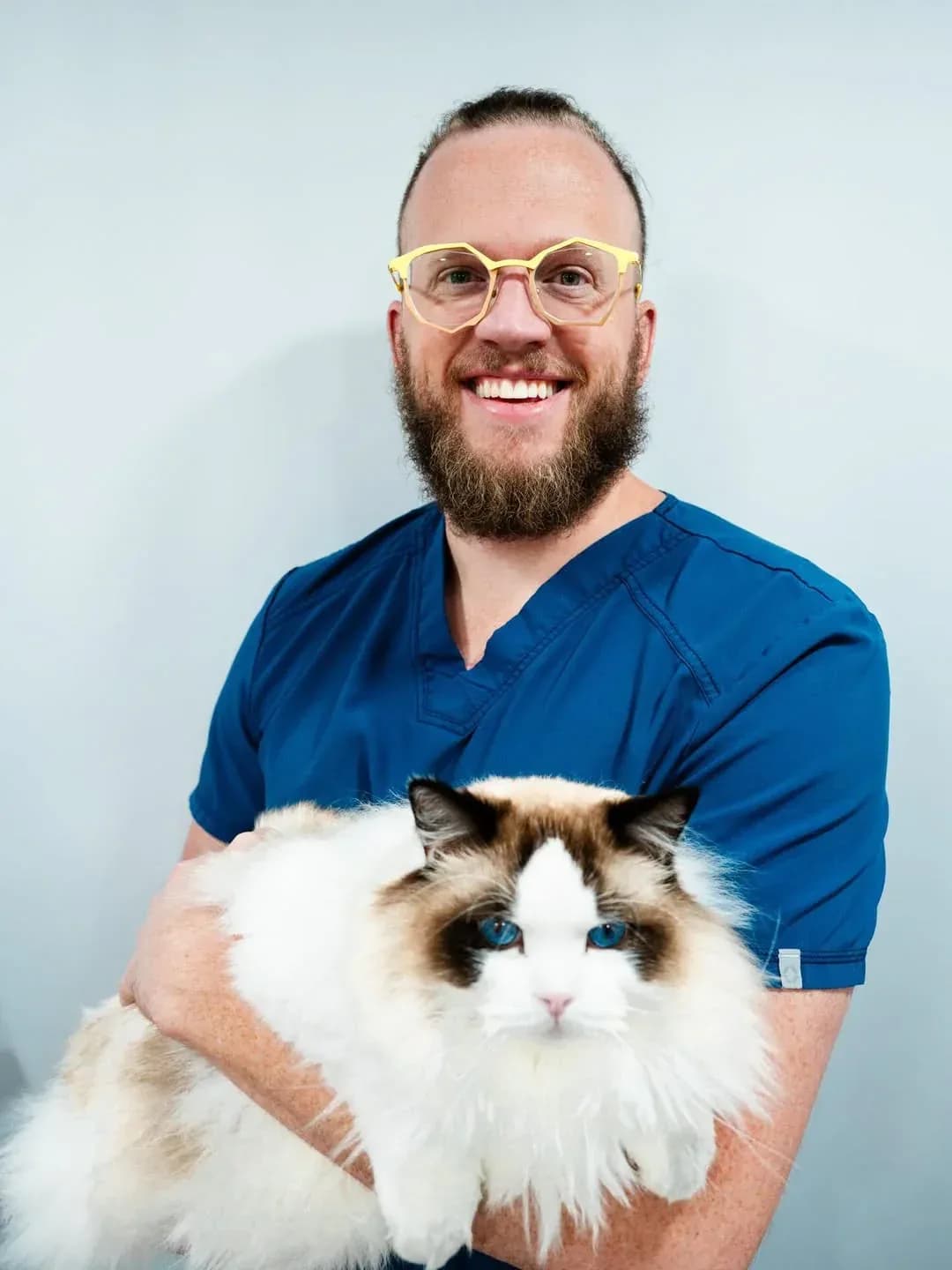
Ask A Vet articles are written by Dr Duncan Houston BVSc, a practising veterinarian, unless another author is named in the byline.