


Fibrocartilaginous Embolic Myelopathy (FCE) in Cats: Vet Neurology Guide 2025 🐱🧠
By Dr. Duncan Houston, BVSc
🔍 Introduction & Overview
Fibrocartilaginous embolic myelopathy (FCE) is an acute, non-compressive spinal cord infarct (“spinal stroke”) caused by disc-derived fibrocartilage lodging in spinal blood vessels. Although rare, especially in cats, FCE leads to sudden neurologic signs—often during or after activity—with potential for significant recovery ⚕️.
- 🐾 Sudden onset of weakness, ataxia, knuckling, or paralysis—commonly lateralized or asymmetric—after mild strain or trauma :contentReference[oaicite:3]{index=3}.
- ⚠ Usually non-painful after the initial distress, as cord compression doesn’t progress :contentReference[oaicite:4]{index=4}.
- 🧪 Typically seen in middle-aged to older domestic shorthair cats (4–12 years), both sexes affected equally :contentReference[oaicite:5]{index=5}.
- 🔬 MRI is the gold standard to confirm focal T2-weighted spinal hyperintensity without compressive lesion :contentReference[oaicite:6]{index=6}.
- 🛡 Management is supportive: intensive nursing, rehab physiotherapy, bladder care; no surgery required :contentReference[oaicite:7]{index=7}.
- 📈 Prognosis is favourable in majority: ~79% regain ambulation; deep-pain perception is key positive predictor :contentReference[oaicite:8]{index=8}.
- 📱 **Ask A Vet** tools help owners send gait videos, track progress, schedule rehab, and receive triage guidance remotely.
1. Pathophysiology & Causes
FCE arises when fibrocartilage—identical to the intervertebral disc nucleus pulposus—enters spinal arterioles or venules, causing ischemia and infarction of cord segments. The precise mechanism of disc-to-vascular entry is not fully understood :contentReference[oaicite:9]{index=9}.
It's common after minor trauma or exertion—jumping, fighting, playful activity—that transiently affects disc integrity :contentReference[oaicite:10]{index=10}.
2. Signalment & Risk Factors
- Most reported cases involve domestic shorthair cats aged between 4 and 12 years :contentReference[oaicite:11]{index=11}.
- No strong breed predisposition, unlike some spine conditions.
- Both males and females equally affected :contentReference[oaicite:12]{index=12}.
3. Clinical Signs
- Sudden collapse or vocalization—a cry of pain followed by rapid onset paresis or paralysis, usually unilateral or hemiversion :contentReference[oaicite:13]{index=13}.
- By 12–24 hours, signs stabilize—no worsening neurologic deficits :contentReference[oaicite:14]{index=14}.
- Ataxia, knuckling, limb dragging evident; pelvic limbs typically affected, but cervical lesions may affect forelimbs :contentReference[oaicite:15]{index=15}.
- Minimal to no ongoing pain; some early discomfort may resolve quickly :contentReference[oaicite:16]{index=16}.
- This non-progressive course distinguishes FCE from IVDD or neoplasia :contentReference[oaicite:17]{index=17}.
- Rarely, incontinence (urinary/fecal) may occur based on lesion location :contentReference[oaicite:18]{index=18}.
4. Diagnostic Approach
- History & neuro exam: acute, non-progressive signs, possible trigger, stabilisation phase.
- Radiographs: usually unremarkable; help rule out fractures, IVDD, tumor :contentReference[oaicite:19]{index=19}.
- MRI: key findings include focal T2-weighted hyperintensity in cord parenchyma without compressive signs; sometimes lateralized :contentReference[oaicite:20]{index=20}.
- CSF analysis: often mild changes; helps exclude infectious/inflammatory conditions :contentReference[oaicite:21]{index=21}.
- Differentials: exclude IVDD, trauma, neoplasia, meningomyelitis.
5. Management & Supportive Care
a. Supportive Nursing
- Hospitalize initially for pressure injury prevention—rotate position, maintain clean bedding :contentReference[oaicite:22]{index=22}.
- Bladder management: expression, monitoring residual urine :contentReference[oaicite:23]{index=23}.
- Prevent pressure sores—use soft bedding and frequent monitoring.
b. Physiotherapy & Rehabilitation
- Early physiotherapy/hydrotherapy to maintain muscle tone, prevent joint contracture :contentReference[oaicite:24]{index=24}.
- Gradual reintroduction to activity, assisted walking, balance exercises.
c. Medications
- Pain relief—NSAIDs, gabapentin as needed (usually minimal chronic pain).
- Steroids not routinely indicated—no evidence of benefit.
6. Prognosis
- ~79–84% of cats regain ambulation within weeks to months if deep-pain intact :contentReference[oaicite:25]{index=25}.
- Better outcomes when residual pain perception is present :contentReference[oaicite:26]{index=26}.
- Recovery can take days to months; most earliest improvements in 2 weeks :contentReference[oaicite:27]{index=27}.
- Recurrence is rare after initial recovery :contentReference[oaicite:28]{index=28}.
- Cases with severe, symmetrical lesions or loss of deep-pain have guarded outlook.
7. Owner Support & Home Care
- 📱 Use Ask A Vet for gait video uploads, bladder updates, and pressure-sore monitoring.
- 🔔 Medication & rehab reminders via the app for consistent care.
- 🧼 Keep living environment safe—non-slip flooring, padded areas, easy access to litter/food.
- 🥣 Feeding care: assist with feeding bowls if mobility limited.
- 🗓 Schedule neuro reexams at 1, 2, 4, 8 weeks post-event.
8. FAQs
Is FCE a stroke?
Yes—it’s essentially a spinal cord infarct caused by emboli of disc material, akin to a stroke.
Should I give steroids?
No—studies show no benefit, and supportive care + rehab are most effective.
Can my cat fully recover?
Yes—most recover ambulation; prognosis is best with retained deep-pain sensation.
Will FCE recur?
No—secondary episodes are extremely uncommon once initial recovery is achieved.
9. Role of Ask A Vet Remote Support
- 📹 Upload gait & posture videos for expert neurologist review.
- 🔔 Rehab and medication reminders ensure consistency.
- 🧭 Triage advice—helping decide if care escalation is needed.
- 💡 Ongoing guidance on bladder care, wound monitoring, and mobility strategies.
Conclusion
FCE in cats is a neurological emergency presenting as sudden, non-progressive spinal cord injury. With prompt diagnosis—especially MRI—and comprehensive supportive care including physiotherapy and attentive nursing, most cats can regain function. Owners empowered by remote support tools like Ask A Vet are pivotal for recovery and quality-of-life optimization 🐾📲.
If your cat experiences sudden weakness or paralysis—especially after activity—contact your vet immediately or start a consult via Ask A Vet for evaluation, remote guidance, and rehabilitation planning.
© 2025 AskAVet.com • Download the Ask A Vet app for gait tracking, rehab scheduling & expert neurology support anytime 🐾📲
This article is general veterinary education and does not diagnose or treat an individual animal. Always confirm medication names, doses and interactions with the veterinarian who knows your pet.
If your animal is struggling to breathe, collapsed, bleeding heavily, seizing, or has eaten something toxic, contact your vet or the nearest emergency clinic now.
Animal Poisons Helpline (AU) 1300 869 738 · Animal Poisons Helpline (NZ) 0800 869 738 · ASPCA Animal Poison Control (US) (888) 426-4435
More from Ask A Vet
For everyday pet care, one scan or tap of the smart pet ID tag opens your pet's free profile on any phone, no app needed; the GPS pet tracker logs live location and activity trends; and the Ask A Vet app keeps your pet's records and routines together.
 QR Code Dog & Cat ID Tag with NFC, HangingView ID Tag
The ASK A VET™ Smart ID Tag is a QR scan or NFC tap on any phone, no app needed, with a free profile you can update anytime.
 Dog & Cat GPS Tracker for Their CollarView tracker
The ASK A VET™ Tracker logs live location and activity trends, so a change in routine never goes unnoticed.
 Talk to a Vet Online: The Ask A Vet AppExplore the app
Ask questions, speak with vets, and keep your pet's records and routines together with Ask A Vet.
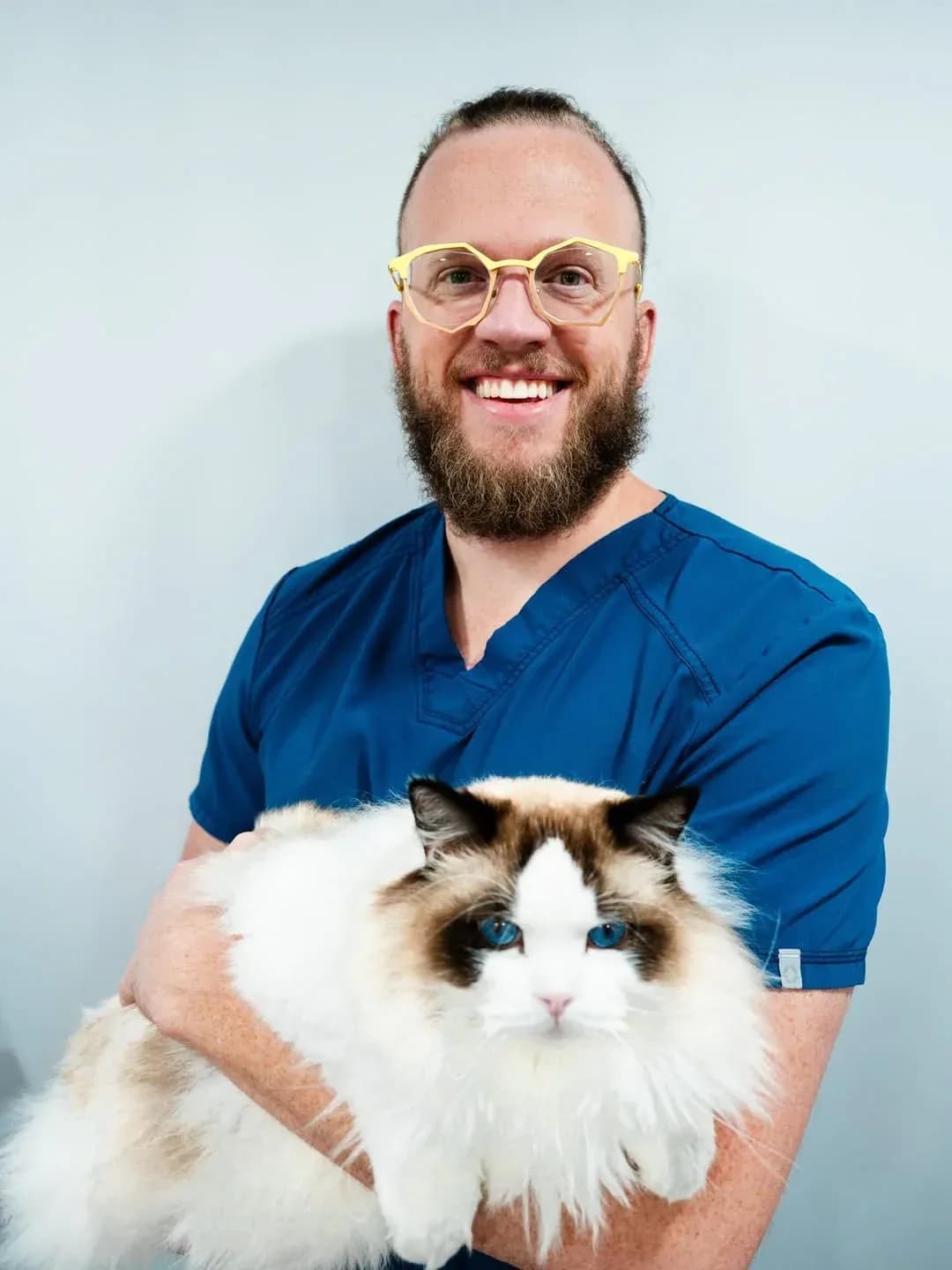
Ask A Vet articles are written by Dr Duncan Houston BVSc, a practising veterinarian, unless another author is named in the byline.