


🩺 Vet Guide 2025: Salivary Mucoceles in Dogs and Cats – Causes, Treatment & Recovery 🐶🐱
While relatively rare, salivary mucoceles—or saliva-filled swellings—can cause discomfort and difficulty eating or breathing in dogs and cats. As a veterinarian, I’ve helped many pets recover from this condition through early diagnosis and effective surgical treatment. In this 2025 guide, I’ll walk you through everything you need to know about salivary mucoceles and how to get your pet the help they need. 🐾
🦷 What Is a Salivary Mucocele?
A salivary mucocele (also called a sialocele) forms when saliva leaks from a damaged salivary gland or duct and collects in the surrounding tissues. The saliva creates a fluid-filled pocket that appears as a soft or firm swelling under the skin or in the mouth. 🧪
This condition can result from trauma to the salivary system or a blocked or damaged duct. Luckily, pets have several salivary glands, so removing one typically doesn’t affect saliva production overall. 🧼
🔍 What Does a Salivary Mucocele Look Like?
Appearance depends on the gland affected. Common signs include:
- 🦷 Submandibular area (under the jaw): A squishy or firm swelling under the skin, like a water balloon
- 👅 Under the tongue (ranula): A bubble-like mass on the floor of the mouth; may interfere with chewing or swallowing
- 👁️ Below the eye: Swelling in the cheek; may cause one eye to appear larger than the other
- 🦴 Roof of the mouth: A noticeable bulge when examining your pet’s oral cavity
As the mucocele grows, it can affect eating, drinking, breathing, or keeping the mouth closed properly. If your pet has facial swelling or a mass in the mouth, schedule a veterinary evaluation immediately. 🐶🐱
🔬 Diagnosing a Salivary Mucocele
Diagnosis is often straightforward. Your vet may:
- 🧪 Aspirate the swelling: A needle is used to draw fluid for analysis
- 🔬 Microscopic exam: Confirms the fluid is saliva and checks for infection
In some cases, imaging like ultrasound may be used to help identify the origin of the leak. 🩻
🛠️ How Is It Treated?
🔪 Surgical Removal
The most common and effective treatment is surgical removal of the affected salivary gland. In some cases, your vet may reroute the duct instead of removing the gland, especially if only the duct is damaged. 🧑⚕️
Why remove it? Because mucoceles usually recur if the source of saliva isn’t completely removed. Most pets have several other glands to compensate, so they’ll still produce enough saliva after surgery. ✅
💉 Temporary Relief
Sometimes, mucoceles are drained to relieve pressure while waiting for surgery. This is especially helpful if the swelling is impairing breathing or swallowing.
- 💧 Drainage: Reduces swelling temporarily
- 💊 Antibiotics or anti-inflammatories: Used if the area is infected or painful
However, draining alone will not cure the problem—the pocket usually fills with saliva again quickly. 📆
🧼 Post-Surgery Recovery
Recovery from salivary gland surgery is usually smooth and straightforward. Aftercare may include:
- 🍲 Soft food for a few days
- 🛏️ Rest and restricted activity
- 🩹 Monitoring the surgical site for swelling or drainage
- 📅 Follow-up visits to check for complications
Most pets recover within 1–2 weeks with no long-term issues. Reoccurrence is rare if the affected gland is completely removed. 💪
📈 Long-Term Outlook
With proper surgical treatment, the prognosis for salivary mucoceles is excellent. In nearly all cases, the issue is resolved after surgery, and the pet returns to normal eating, drinking, and playing behavior. 🐕🐈
While the condition is uncommon, knowing the signs and acting early can save your pet from discomfort and potential complications. 🩺
📲 Final Thoughts from Dr Duncan Houston
If you notice a strange swelling on your pet’s neck, under their tongue, or near their eye, don’t wait—have it checked. Salivary mucoceles are uncommon but easily treatable when caught early. Prompt diagnosis and surgery prevent complications and keep your pet happy and healthy. 🐾
Need expert help or a second opinion? Visit AskAVet.com or download the Ask A Vet app for quick consultations and trusted veterinary support. 📱🧑⚕️
This article is general veterinary education and does not diagnose or treat an individual animal. Always confirm medication names, doses and interactions with the veterinarian who knows your pet.
If your animal is struggling to breathe, collapsed, bleeding heavily, seizing, or has eaten something toxic, contact your vet or the nearest emergency clinic now.
Animal Poisons Helpline (AU) 1300 869 738 · Animal Poisons Helpline (NZ) 0800 869 738 · ASPCA Animal Poison Control (US) (888) 426-4435
More from Ask A Vet
For everyday pet care, one scan or tap of the smart pet ID tag opens your pet's free profile on any phone, no app needed; the GPS pet tracker logs live location and activity trends; and the Ask A Vet app keeps your pet's records and routines together.
 Hanging QR & NFC Pet ID TagView ID Tag
The ASK A VET™ Smart ID Tag is a QR scan or NFC tap on any phone, no app needed, with a free profile you can update anytime.
 GPS Pet Tracker for Dogs and CatsView tracker
The ASK A VET™ Tracker logs live location and activity trends, so a change in routine never goes unnoticed.
 Talk to a Vet Online: The Ask A Vet AppExplore the app
Ask questions, speak with vets, and keep your pet's records and routines together with Ask A Vet.
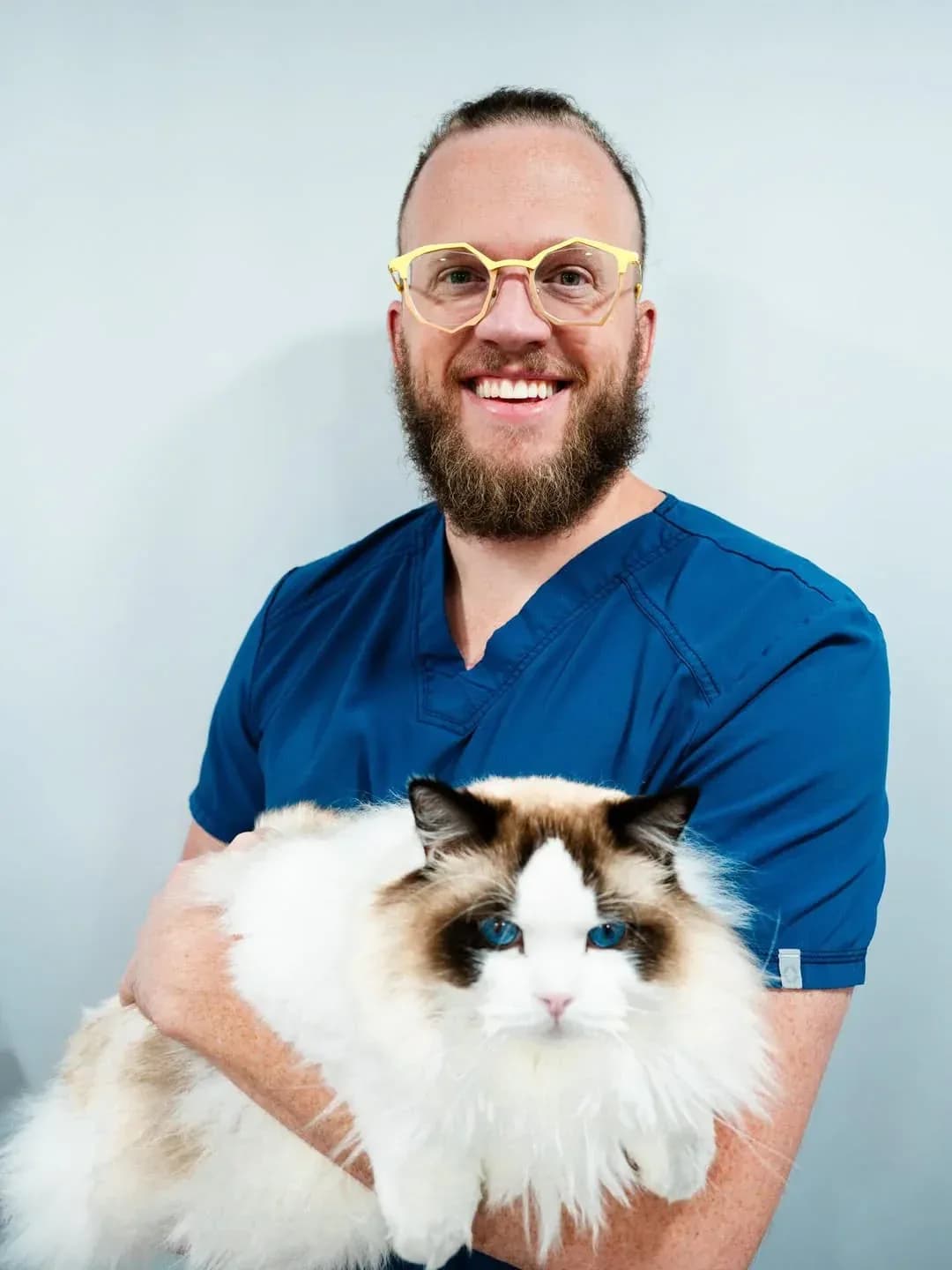
Ask A Vet articles are written by Dr Duncan Houston BVSc, a practising veterinarian, unless another author is named in the byline.