


Vet’s 2025 Guide to Canine Rectal Prolapse 🩺 Causes, Diagnosis & Treatment
By Dr. Duncan Houston BVSc
💡 What Is Rectal Prolapse?
Rectal prolapse occurs when the rectum, or part of it, protrudes through the anus—visible as a red, sausage-like or doughnut-shaped mass. Prolapse may be partial (mucosal only, retracts after defecation), or complete (full‐thickness, persists). This is a painful, urgent issue requiring immediate veterinary attention.
🔍 How Common and Who’s at Risk?
Rectal prolapse is more common in young dogs with straining from diarrhea or parasites, but can affect any age or breed—including pregnant or older dogs with constipation or urinary obstruction. It’s also seen in dogs with prostatic issues or during difficult labor.
🚩 Common Signs & Symptoms
- Visible red or pink tubular mass protruding from anus.
- Straining to defecate/urinate (tenesmus), with hunched posture.
- Scooting rear end, biting anus, discomfort.
- Painful defecation, decreased appetite, abdominal pain.
- If untreated, edema, darkening (ischemia), necrosis, and sepsis risk.
🧪 Diagnose the Underlying Cause & Severity
- Physical exam & rectal palpation confirm prolapse and rule out intussusception or masses.
- History: ask about diarrhea, constipation, pregnancy, straining, and foreign material exposure.
- Fecal exam: detect parasites (hookworms, whipworms, coccidia, Giardia).
- Bloodwork: CBC/Chem to identify infection, hydration status, and electrolyte imbalances.
- Imaging: X‑rays or ultrasound to assess bowel, bladder, prostate, foreign bodies, dystocia.
🩺 Treatment – Step by Step (2025)
1. Emergency Prolapse Reduction
As a veterinarian, I gently reduce the prolapsed rectum under general anesthesia or epidural to minimize pain and straining. Before reduction, we use:
- Warm saline lavage & lubricants.
- Osmotic agents (e.g., 50 % dextrose, mannitol) to reduce swelling.
2. Retaining Sutures: Purse-string
A purse-string suture is placed around the anus (loose enough for one finger and stool passage) for 5–7 days to prevent re-prolapse.
3. Surgical Resection & Colopexy
If necrosis is present or tissue irreducible, I perform:
- Resection‑anastomosis: remove damaged section and reconnect healthy ends.
- Colopexy: secure the colon to the abdominal wall to prevent recurrence—great for repeated cases.
4. Treat Underlying Causes
Successful long-term treatment requires correcting the cause:
- Parasites: deworm accordingly.
- Diarrhea: treat enteritis (diet, probiotics, meds).
- Constipation: use fiber, hydration, treat obstruction or tumor.
- Urinary or prostate issues: address bladder stones, infection, and enlarged prostate.
- Obstetric care: C‑section for dystocia.
📅 Post‑Op Care & Monitoring
- Analgesia and stool softeners to reduce strain.
- Soft/moistened diet, low-residue, for 7–14 days.
- Antibiotics if indicated to prevent infection.
- E-collar to prevent self-trauma.
- Check sutures daily; remove purse-string after ~5–7 days.
- Re-evaluate stool habits, underlying condition resolution.
📈 Prognosis Is Good with Prompt Care
- Early detection & treatment often lead to full recovery.
- Resection/anastomosis prognosis depends on tissue health – guarded if necrosis.
- Colopexy shows excellent long-term results—no recurrence in small study of 8 dogs.
- Untreated cases risk tissue death, infection, and life-threatening complications.
🚫 Prevention Tips
- Treat diarrhea and parasites promptly through regular fecal checks and deworming.
- Ensure hydration and fiber intake to prevent constipation or straining.
- Prevent ingestion of foreign objects and timely address urinary issues or prostate health.
- Monitor bitches in labor; provide veterinary assistance if delivery is prolonged.
🏡 Ask A Vet Home Support
- 📷 Upload photos of prolapse for remote vet input.
- 🕒 Schedule reminders for meds, diets, and follow-up visits.
- 📊 Track stool consistency, appetite, strain behavior.
- 🔔 Alerts for recurrence signs—bleeding, swelling, straining.
- 🧠 Guidance modules: home care, diet planning, hydration.
🔍 Key Takeaways
- Rectal prolapse is a serious, visible event requiring vet care immediately.
- Manual reduction and purse-string orders the tissue; surgery is needed for damage or recurrence.
- Address the underlying causes to prevent relapse.
- Home care—soft stool, hydration, monitoring—is vital post-treatment.
- Ask A Vet supports all post-care steps with reminders, tracking, vet communication and education.
🩺 Final Word ❤️
In 2025, the combination of veterinary skill—manual reduction, surgery, and addressing root causes—plus owner engagement through the Ask A Vet app, empowers dog parents to manage rectal prolapse effectively and compassionately. With rapid response and consistent aftercare, most dogs recover fully and enjoy continued health. 🐾✨
Visit AskAVet.com and download the Ask A Vet app to log signs, set medication reminders, upload photos, schedule follow-ups, and stay connected with your vet—right in your pocket. 📲
This article is general veterinary education and does not diagnose or treat an individual animal. Always confirm medication names, doses and interactions with the veterinarian who knows your pet.
If your animal is struggling to breathe, collapsed, bleeding heavily, seizing, or has eaten something toxic, contact your vet or the nearest emergency clinic now.
Animal Poisons Helpline (AU) 1300 869 738 · Animal Poisons Helpline (NZ) 0800 869 738 · ASPCA Animal Poison Control (US) (888) 426-4435
More from Ask A Vet
For everyday pet care, one scan or tap of the smart pet ID tag opens your pet's free profile on any phone, no app needed; the GPS pet tracker logs live location and activity trends; and the Ask A Vet app keeps your pet's records and routines together.
 Hanging QR & NFC Pet ID TagView ID Tag
The ASK A VET™ Smart ID Tag is a QR scan or NFC tap on any phone, no app needed, with a free profile you can update anytime.
 GPS Pet Tracker for Dogs and CatsView tracker
The ASK A VET™ Tracker logs live location and activity trends, so a change in routine never goes unnoticed.
 Talk to a Vet Online: The Ask A Vet AppExplore the app
Ask questions, speak with vets, and keep your pet's records and routines together with Ask A Vet.
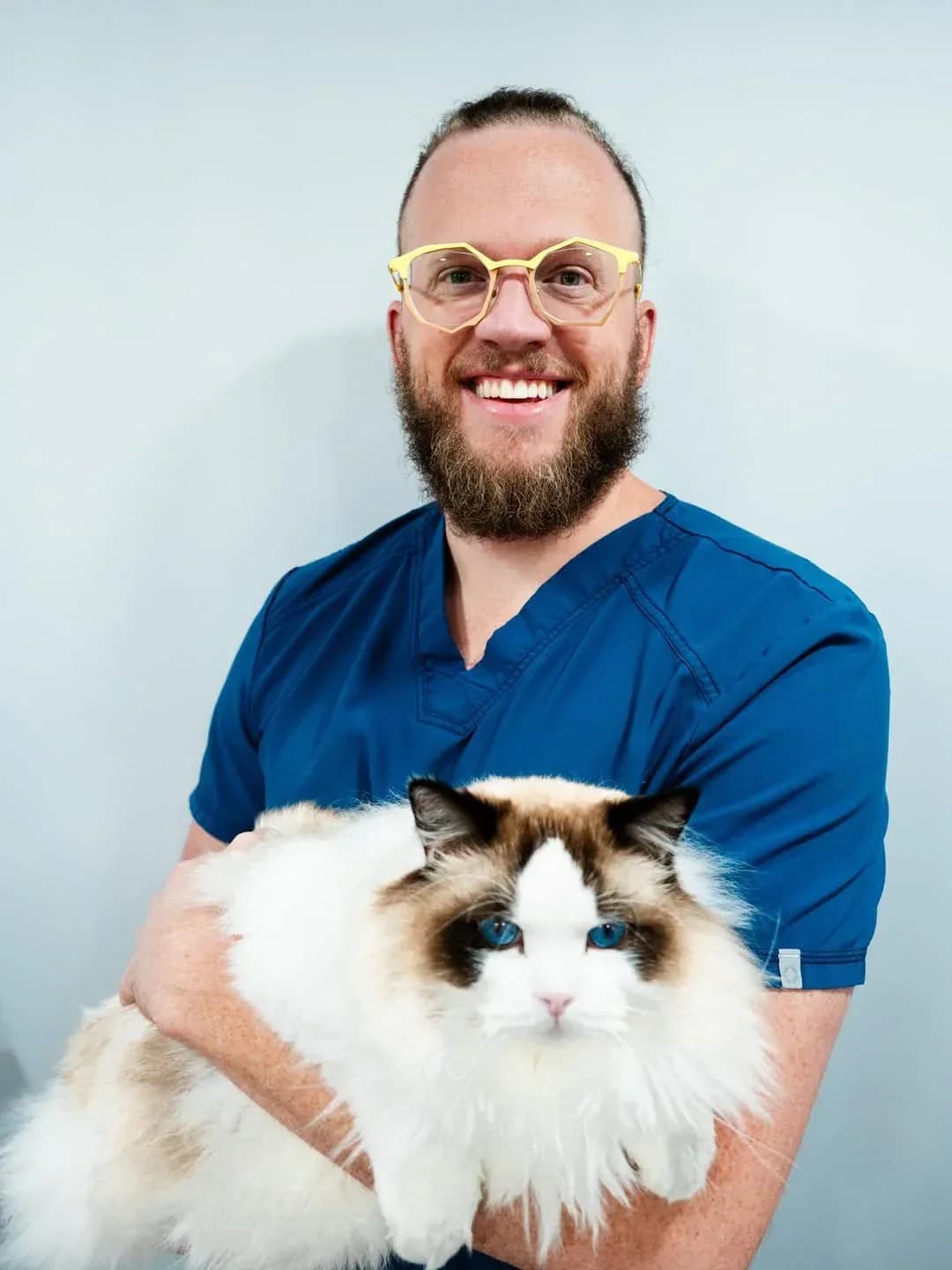
Ask A Vet articles are written by Dr Duncan Houston BVSc, a practising veterinarian, unless another author is named in the byline.