
Onion & Garlic Toxicity Calculator
Your dog or cat got into onion, garlic, chives or leeks? Check the risk in seconds, then act. Built by a vet.
Which pet got into it?
Cats and Japanese breeds are scored more conservatively.
How much do they weigh, and what did they eat?
Body weight sets the dose per kilogram; the type, form and amount decide the estimate.

Here is the risk estimate
The estimate and the next steps come from what you entered.

Your risk band will appear here
Answer the two screens and press “Check the risk”.
Onion & garlic poisoning is delayed. Red-blood-cell damage and anaemia often don't show for 1 to 5 days. A pet that looks fine right now can still be poisoned. When the number is borderline, treat it as the higher risk and call.

Talk. Track. Trust.
What's safe shouldn't mean guessing at midnight
ASK A VET™ lets you log what your pet ate, track symptoms day by day, and chat to a certified vet when something's off — all in one place.
Download ASK A VET today



This calculator is an educational guide from ASK A VET™ and does not replace an in-person veterinary assessment or a poison-control service. Doses are estimates and real cases vary. If you suspect poisoning, contact your veterinarian or an animal poison-control service immediately.
Why onion & garlic are dangerous

Every part of the onion/garlic family (Allium) — onion, garlic, chives, leeks and shallots — contains sulfur compounds that damage red blood cells. The result is Heinz-body haemolytic anaemia: the red cells rupture and the pet can't carry oxygen properly.
Cooking, drying or powdering does not make it safe. Powders and dehydrated flakes are the most dangerous because the toxin is concentrated. Garlic is roughly 3–5× more toxic than onion gram for gram.
Cats are the most sensitive species, followed by dogs. Japanese dog breeds such as Akitas and Shiba Inus can be extra vulnerable.
Rough weights (for reference)
| Item | Approx. weight |
|---|---|
| Medium onion | ~110 g |
| Garlic clove | ~4 g |
| 1 tsp garlic powder | ~3 g (≈ 8 fresh cloves) |
| 1 tsp onion powder | ~2.5 g |
Warning signs to watch (1–5 days)
Vomiting, diarrhoea, drooling or belly pain early on. Then lethargy, weakness, pale or yellow gums, fast breathing, racing heart, red-brown urine or collapse. These signal anaemia and are an emergency.
How this calculator works
It converts what your pet ate into an onion-equivalent dose per kilogram of body weight, adjusting for garlic potency and concentrated powders. It then compares that result with the calculator's risk bands. Cats and Japanese breeds are scored more conservatively. It is a guide to help you act fast, not a diagnosis.
My pet ate a tiny bit — do I still need to worry?
A single small lick of gravy or one stray ring is usually low risk for a large dog, but risk is never zero for a cat or a small pet, and repeated small amounts can add up. Because signs are delayed, call your vet or a pet poison line whenever you are unsure.
What will the vet do?
If exposure was recent, the vet may induce vomiting and consider decontamination. Blood tests may be repeated over several days because anaemia is delayed. Severe cases may need fluids, oxygen or a transfusion. Early action makes a major difference.
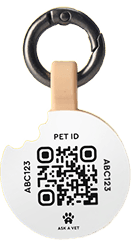
Ask A Vet also makes Smart ID Tags for dogs and cats. See the Smart ID Tag
