
Puppy Weight Calculator and Kitten Size Predictor
How big will my puppy or kitten get, and when? Enter breed, sex, age and weight today for an estimate in kilograms and pounds.
Your puppy or kitten
Not purebred? Choose Mixed breed or not sure.
Weight and age
Know the parents' adult weights? (optional, best clue for mixed breeds)
Result
Enter the weight and age to see the estimate.
Next steps
- Weigh every 2 weeks on the same scales and re-run this check. A kitten or small puppy can go in a box or carrier on kitchen scales (take the box weight off).
- Rib test: Run both hands over the ribs. You want to feel them like the bones on the back of your hand, without pushing in. Just right: ribs felt easily without pressing, visible waist. More help: Pet BMI and Body Condition Calculator.
- Feeding: Puppy and Kitten Feeding Calculator.
- Desexing (spaying or neutering): the right age depends on expected adult size. See the When to Desex Calculator.

Still have questions about your pet?
Download ASK A VET for instant guidance from our AI Vet, chat with a veterinary professional for urgent concerns, or book a telehealth video call with a vet—all from the comfort of home.
Download ASK A VET today

This tool is general information for pet owners and does not replace an examination by a veterinarian. Adult size depends on genes, food, health and body condition, so treat every figure here as an estimate. Nothing you enter is sent to or stored by askavet.com. All values stay in your browser and leave only in the printout or notes you create.
How to use the puppy and kitten size predictor
Pick puppy or kitten, then the breed. If your pet is a cross, a rescue or you are not sure, choose Mixed breed or not sure (for a kitten, Moggie, the Australian and British word for a mixed-breed cat). Add the sex if you know it, today's weight in kilograms or pounds, and the age in weeks or months. If you know the adult weights of the mother and father, add them too: for a mixed breed they are the best clue you have.
The result gives an estimated adult weight range in kilograms and pounds, how far along your pet is now (as a percent of that adult weight), a size class, roughly when adult size is reached, and a growth check that compares your pet's own weight for age with the breed or parents' figure. Every result ends with a next step.
The estimate is only as good as the numbers you put in. Weigh on the same scales each time, use the real date of birth if you have it, and remember that a puppy or kitten that is a little thin will read small and one that is carrying extra weight will read big.
The formula behind this calculator
1. The adult figure: breed or parents first
If you pick a breed, the adult weight range and typical weight are the same figures the ASK A VET Feeding Calculator uses, adjusted for sex the same way (typical weight x 0.94 for a female, x 1.06 for a male). If you enter the parents' adult weights, they take priority: the estimate runs from the lighter to the heavier parent, and is never narrower than 15% either side of their average.
2. The growth curve: how far along is your puppy?
For puppies we use the growth curves in the FEDIAF Nutritional Guidelines (2025), which give the percent of expected adult (mature) body weight for a given age in weeks, from weaning at 8 weeks to 1 year, in five bands of expected adult weight:
| Expected adult weight | % of adult weight now | At 12 weeks | At 6 months (26 weeks) |
|---|---|---|---|
| Up to 7 kg (15 lb) | 36.92 x Ln(weeks) - 43.57 | 48% | 77% |
| Over 7 to 15 kg (15 to 33 lb) | 36.86 x Ln(weeks) - 48.22 | 43% | 72% |
| Over 15 to 27.5 kg (33 to 61 lb) | 39.88 x Ln(weeks) - 60.70 | 38% | 69% |
| Over 27.5 to 47.5 kg (61 to 105 lb) | 36.96 x Ln(weeks) - 56.18 | 36% | 64% |
| Over 47.5 kg (105 lb) | 36.61 x Ln(weeks) - 62.39 | 29% | 57% |
Ln is the natural logarithm. The tool picks the band from the breed or parents' figure. With no breed or parents, it picks the band your puppy's own projection lands in. Your puppy's own projection is then today's weight divided by that percent: 11 kg at 12 weeks on the 27.5 to 47.5 kg curve is 11 / 0.357 = 30.8 kg (68 lb).
3. Kittens
For kittens we use a published feline growth curve from a colony of more than 500 cats (American Journal of Veterinary Research, 1973), which has separate male and female curves. The share of adult weight at a given age in days is e^(-K x e^(-alpha x days)), with K 3.3238 and alpha 0.0105 for males and K 2.9298 and alpha 0.0114 for females. If you are not sure of the sex, the tool averages the two. A 2021 study of growing cats is the cross-check: kittens were at about 75% of adult weight by 7 months.
4. The headline, the range and the growth check
When the breed or parents are known, the headline is that figure, so this page and the Feeding Calculator say the same thing. Your pet's own projection is shown under it as a growth check: if the two overlap, your pet is on track. If not, the result says whether your pet is tracking below or above, and what to do. With no breed and no parents, the headline is the projection, shown as a range of 15% either side, because no published source gives the exact spread and single weigh-ins vary.
5. Size class and when growth stops
Size classes use the cut-offs in the Feeding Calculator's breed list, which match the size classes in the growth standard study by Salt and colleagues (2017): small under 10 kg (22 lb, including toy dogs under 5 kg, 11 lb), medium 10 to 25 kg (22 to 55 lb), large 25 to 40 kg (55 to 88 lb) and giant 40 kg (88 lb) and over.
| Adult size | Adult weight reached | Source |
|---|---|---|
| Toy, small and medium dogs | About 9 to 12 months | 99% of adult weight at about 9 to 10 months (Hawthorne 2004); toy dogs adult at about 1 year (WALTHAM) |
| Large dogs | About 11 to 15 months | Hawthorne 2004 |
| Giant dogs | 11 to 15 months for 99% of the weight, up to about 2 years to fill out | Hawthorne 2004; WALTHAM; Salt 2017 |
| Kittens | About 13 months (female) and 16 months (male) | Merenda 2021 |
Other rules of thumb you will see
Many puppy calculators use quick rules: triple a small breed's 8-week weight, double a medium or large breed's 16-week weight, or divide weight by age in weeks and multiply by 52 (or by 32 for kittens). They are easy, but they are not published growth standards, and they assume every puppy is the same share of the way to adult size at the same age. The published curves show that is not true: at 16 weeks a toy dog is at about 59% of adult weight and a giant breed at about 39%. That is why this tool uses the curve that matches your pet's expected size.
When a growing puppy or kitten needs a vet
Signs override the maths. Collapse, struggling to breathe, pale or blue gums or a long seizure mean go to an emergency vet now. Vomiting, diarrhoea or not eating in a puppy or kitten means call your vet today. Weight loss, or a weight that stays flat for 2 weeks or more before adult size, also needs a call to your vet today: in the WALTHAM growth chart guidance a flat growth line before adult weight is a sign of a possible growth problem. A puppy or kitten whose growth keeps drifting well above or below its expected path is worth a vet check at the next visit.
Frequently asked questions
How accurate is a puppy weight calculator?
It is an estimate, not a promise. Breed ranges are wide (a Labrador Retriever adult can be anywhere from 24.9 to 36.3 kg, or 55 to 80 lb), mixed breeds vary more, and one weigh-in can mislead if your puppy is a little thin or a little chubby. The estimate improves with age and with repeat weigh-ins. Weigh every 2 weeks and check that your puppy keeps tracking the same way. Growth that keeps drifting up or down is worth a vet check.
When do puppies stop growing?
In a WALTHAM study of 12 breeds, toy, small and medium dogs reached 99% of adult weight at about 9 to 10 months, and large and giant breeds at about 11 to 15 months. WALTHAM says a toy dog reaches adulthood in about 1 year and a giant breed (over 40 kg, 88 lb) takes nearly 2 years, so the biggest dogs keep filling out well past their first birthday.
When do kittens stop growing?
Most growth happens in the first 7 months. In a 2021 study of growing cats, kittens grew fastest until the 7th month, when they were at about 75% of adult weight. Females reached adult weight at about 13 months and males at about 16 months.
How do I estimate a mixed breed puppy's adult size?
The best clue is the parents. If you know their adult weights, enter them and the estimate spans the lighter to the heavier parent. If you do not, choose Mixed breed or not sure and the tool projects adult weight from your puppy's own weight and age on a published growth curve. Re-run it every 2 weeks: the answer settles as your puppy grows.
Does the double-the-weight-at-16-weeks rule work?
It is a rule of thumb, not a published standard. On the FEDIAF growth curves a 16-week-old puppy is at about 59% of adult weight for the smallest dogs and about 39% for the biggest, so doubling the 16-week weight can be close for a medium dog and well off for toy and giant breeds. This tool uses the published curve for your puppy's expected size instead.
Will desexing (spaying or neutering) change how big my puppy gets?
Only a little. In the study behind the WALTHAM puppy growth charts, which used records from more than 6 million young dogs, neutering before 37 weeks was linked with a slight upward shift in growth and neutering after 37 weeks with a slight downward shift, and both shifts were small compared with normal differences between dogs. For bigger breeds the timing matters more for the joints: see the When to Desex Calculator.
Sources
- FEDIAF. Nutritional Guidelines for Complete and Complementary Pet Food for Cats and Dogs, September 2025, Table VII-8a (growth curves, from GfE 1989 and Meyer and Zentek 1992).
- Hawthorne AJ, Booles D, Nugent PA, Gettinby G, Wilkinson J. Body-weight changes during growth in puppies of different breeds. J Nutr 2004;134:2027S-2030S.
- Salt C, Morris PJ, German AJ, et al. Growth standard charts for monitoring bodyweight in dogs of different sizes. PLoS ONE 2017;12(9):e0182064.
- WALTHAM Petcare Science Institute. WALTHAM Puppy Growth Charts and Kitten Growth Charts (waltham.com).
- Postnatal body weight changes of domestic cats maintained in an outdoor colony. Am J Vet Res 1973;34(4):575.
- Merenda MEZ, Sato J, Scheibel S, et al. Growth curve and energy intake in male and female cats. Top Companion Anim Med 2021;44:100518.
- Breed adult weights: the ASK A VET Feeding Calculator breed list (AKC breed data plus reviewed estimates for crosses).
Related tools
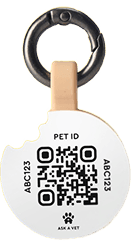
Ask A Vet also makes a GPS Tracker for dogs and cats. See the GPS Tracker
