


By Dr Duncan Houston
Wanting to feed your dog well is sensible. The difficulty is that attractive ingredients and confident marketing can make nutritional claims seem more certain than they are.
A useful feeding decision starts with your dog's needs, the completeness of the diet and its safety. It does not depend on whether the meal looks appealing to a person.
Quick Answer
A healthy dog diet must provide the right nutrients and calories for the individual dog, regardless of whether it is dry, canned or cooked at home. “Natural” does not guarantee safety, balance or superior health outcomes. Raw feeding adds contamination risks, while home-prepared meals need professional formulation and accurate preparation.
Myth 1: Natural foods are automatically safe
Grapes, onions and macadamia nuts are natural foods that can harm dogs. Raw dough, bones and spoiled food can also cause serious problems. Food safety depends on the ingredient, quantity, preparation and dog, not a reassuring label.
Likewise, a supplement made from a plant or mushroom can have adverse effects or interact with medicines. “Natural” should never replace checking what a substance contains and whether it is appropriate.
Myth 2: Meat and vegetables make a complete meal
Meat, vegetables and rice can look wholesome while lacking essential nutrients or supplying them in unsuitable ratios. Calcium, phosphorus, vitamins and trace minerals need deliberate formulation, especially during growth.
UC Davis research evaluating homemade dog-food recipes found that most did not meet all assessed nutrient requirements. A safe home-prepared plan requires a recipe formulated for your dog, including the specified ingredients and supplements. Substituting foods or omitting a supplement can alter the balance.
Myth 3: Variety will balance the diet over time
Rotating random meats, organs and vegetables does not reliably correct nutrient gaps. Variety is optional; nutritional adequacy is essential. An appropriately formulated recipe can include variety, but the permitted substitutions need to be designed into it.
Frequent abrupt changes can also make it harder to recognise a food intolerance or identify the cause of digestive upset.
Myth 4: Good poop proves the food is right
Firm stools are useful observations, but they do not measure calcium balance, vitamin supply or overall diet quality. Assess body condition, muscle, growth, weight trend and medical needs as well.
A dog who is losing weight, repeatedly vomiting or becoming less active needs investigation even if the stools look normal.
Myth 5: Cooking makes food nutritionally worthless
Cooking changes foods and can reduce some nutrients, but a properly formulated cooked diet accounts for preparation. It can also improve digestibility and reduce microbial hazards. The relevant question is whether the finished meal meets requirements.
Tufts veterinary nutrition guidance explains why ingredient appearance and marketing claims are poor substitutes for assessing the complete diet.
Myth 6: Raw is healthier if you handle it carefully
Careful hygiene helps reduce exposure but cannot make contaminated food risk-free. Pets may carry or shed pathogens without obvious illness. People in the household can also be exposed.
WSAVA's raw-diet guidance identifies bacterial contamination, nutritional imbalance and bone injuries as concerns. Claims of broad health advantages over balanced cooked diets are not established. Puppies and households with vulnerable people deserve particular caution.
Myth 7: Grain-free means better nutrition
Many dogs digest appropriately prepared grains well. Avoiding grains is not automatically useful, and a grain-free food may replace them with other starches. Suspected food allergy should be investigated with a veterinary plan rather than repeated unsystematic exclusions.
Myth 8: Every dog needs extra supplements
A complete diet does not usually need added vitamins and minerals. Excesses can be harmful. A professionally formulated homemade recipe may require specific supplements, but an arbitrary multivitamin does not guarantee that an incomplete meal becomes balanced.
Myth 9: Bones are the best dental care
Bones can fracture teeth or cause choking, constipation and obstruction. Use a veterinary dental-care plan, including tooth brushing when appropriate, instead of assuming chewing a bone is safe preventive care.
How to assess feeding risk
| Situation | Concern | Action |
|---|---|---|
| Complete diet appropriate for age and health; stable weight | Routine monitoring | Review portions and body condition regularly. |
| Home recipe without formulation, major topper use or supplements added freely | Possible nutrient imbalance | Arrange a nutrition review before relying on it long term. |
| Puppy, pregnancy or chronic disease with an improvised diet | Higher nutritional vulnerability | Seek an individual plan promptly. |
| Suspected toxin, choking, severe pain, repeated vomiting or collapse | Potential emergency | Contact an emergency vet immediately. |
What should you do next?
- List everything eaten, including treats, chews, scraps and supplements.
- Check the nutritional-adequacy statement and life stage on packaged foods.
- Ask who formulates the food and how nutrient content and contamination are controlled. The WSAVA selection checklist provides useful questions.
- For home cooking, obtain a recipe from a suitably qualified veterinary nutrition professional and follow it accurately.
- Change diets gradually unless your vet gives a different plan, then monitor weight, appetite and comfort.
Common mistakes to avoid
- Choosing food by price or ingredient-list appearance alone.
- Using testimonials as proof of disease prevention.
- Assuming pickiness is always behavioural when nausea or dental pain may be present.
- Adding several supplements instead of reviewing the base diet.
Frequently asked questions
Can home-cooked food be suitable?
Yes, when it is formulated for your dog and prepared consistently. Improvising from internet recipes is unreliable.
Do dogs need to eat like wolves?
No. A dog's needs are assessed from canine nutrition and their life stage, activity and health, not an ancestral story.
Is dry food automatically unhealthy?
No. Judge the complete diet and the dog's response, not the processing category alone.
Should I change food if my dog is doing well?
There may be no need. Review nutritional adequacy and body condition before changing because of marketing or trends.
Good feeding is repeatable, safe and nutritionally appropriate. A simple well-designed plan is more useful than an increasingly complicated collection of ingredients.
ASK A VET™ can support you with questions to raise when reviewing your dog's diet with your veterinary team.
This article is general veterinary education and does not diagnose or treat an individual animal. Always confirm medication names, doses and interactions with the veterinarian who knows your pet.
If your animal is struggling to breathe, collapsed, bleeding heavily, seizing, or has eaten something toxic, contact your vet or the nearest emergency clinic now.
Animal Poisons Helpline (AU) 1300 869 738 · Animal Poisons Helpline (NZ) 0800 869 738 · ASPCA Animal Poison Control (US) (888) 426-4435
More from Ask A Vet
For everyday pet care, one scan or tap of the smart pet ID tag opens your pet's free profile on any phone, no app needed; the GPS pet tracker logs live location and activity trends; and the Ask A Vet app keeps your pet's records and routines together.
 Hanging QR & NFC Pet ID TagView ID Tag
The ASK A VET™ Smart ID Tag is a QR scan or NFC tap on any phone, no app needed, with a free profile you can update anytime.
 Dog & Cat GPS Tracker for Their CollarView tracker
The ASK A VET™ Tracker logs live location and activity trends, so a change in routine never goes unnoticed.
 Talk to a Vet Online: The Ask A Vet AppExplore the app
Ask questions, speak with vets, and keep your pet's records and routines together with Ask A Vet.
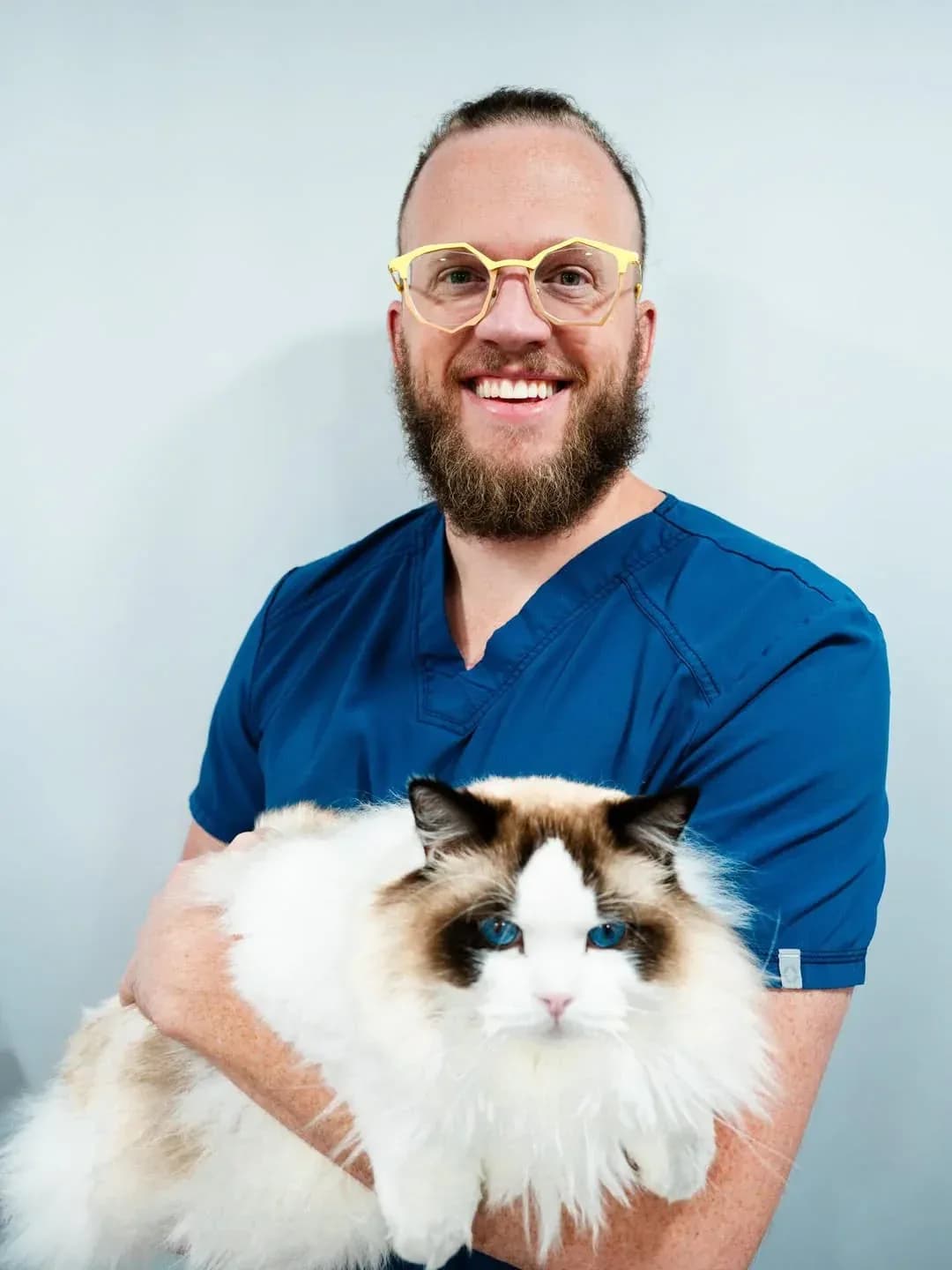
Ask A Vet articles are written by Dr Duncan Houston BVSc, a practising veterinarian, unless another author is named in the byline.