
CHASE Score Calculator: Chiari-like Malformation and Syringomyelia Questionnaire for Dogs
Score the five-question CHASE owner questionnaire (Valentino, Olby and colleagues, 2026) to put a number on how much your dog has been scratching, anxious, sensitive, uncomfortable and restless over the past week, compare it with healthy and affected dogs, and track whether pregabalin, gabapentin or any other treatment for Chiari-like malformation and syringomyelia is actually working.
Questionnaire
One questionnaire, two modes. Pet owners answer the five published questions about the past week and get a plain-language reading against the healthy and affected reference ranges, plus the change since last time. Vets and nurses get MRI, treatment and palpation fields, clinical wording and a signed printable record. The questions, scoring and tracking are identical in both.
Who is using this?
Owner mode: plain-language result and next steps. The questions are the same in both modes.
About the dog
Optional, but diagnosis status, treatment and the factors below change what the score means.
The five CHASE questions
Answer from what you have actually seen over the past week, not what you fear, and not what the dog was like months ago. The person who lives with the dog day to day should answer, and the same person each time.
0 = not at all · 6 = couldn't be more. Every question uses the same 0 to 6 scale. Published wording: Valentino et al. 2026.
Alongside the CHASE (optional)
The CHASE authors recommend pairing the owner questionnaire with a veterinarian's palpation score. Owners can also record the Rutherford neuropathic pain (NeP) score from our companion calculator so both numbers sit on one record.
Score the NeP questionnaire here, then enter the result. Not part of the CHASE total.
The four-site scheme used alongside CHASE in the validation trial. Recorded and totalled out of 12; it is not added to the CHASE total.
Compare with a previous CHASE score (optional)
Enter the last total and its date to see the change. A fall of 4 or more points was the treatment-response cut-off in the validation trial. Because each answer covers the past week, scores taken less than 7 days apart overlap.
CHASE score
5 items, 0 to 30. Higher = more signs
Talk. Track. Trust.
A CHASE score is one week in a long condition.
The ASK A VET™ app keeps your dog's scores, medications, MRI reports and videos in one health profile, reminds you to re-score two weeks after every change, and puts a certified vet in your pocket for the nights when the crying starts.
Download ASK A VET today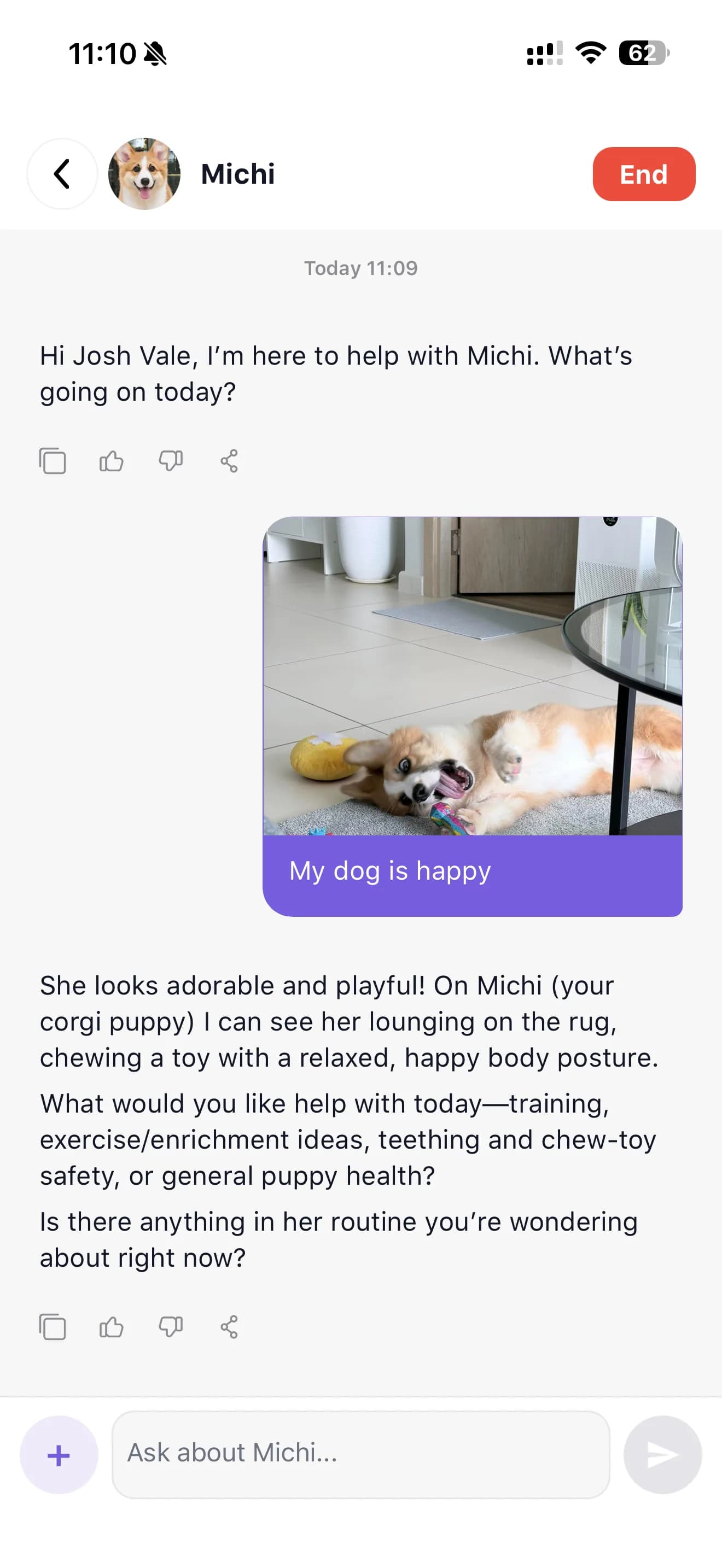

This tool is educational and is not a substitute for hands-on veterinary care. If you are worried about your pet, contact your vet.
Instrument: Valentino et al., J Vet Intern Med 2026
Quick answer
The CHASE questionnaire is a five-question owner score for dogs with Chiari-like malformation and syringomyelia (CM/SM). You rate how much your dog has been scratching, anxious, sensitive, uncomfortable and restless over the past week, each from 0 (not at all) to 6 (couldn't be more), for a total of 0 to 30. In the validation study healthy dogs scored 0 to 6 (average 1.4) and dogs with MRI-confirmed CM/SM scored 6 to 24 (average 15.3). A score of 7 or more is above anything a healthy dog scored, which makes it a reason to see a vet and discuss MRI, though it does not diagnose the disease by itself. The questionnaire's real strength is tracking: it was the only measure in a blinded pregabalin trial that separated the drug from placebo, and a fall of 4 or more points from a previous score is the published cut-off for a treatment response. Re-score at the same time of day, by the same person, about two weeks after any change in treatment.
- How to use this calculator
- What are Chiari-like malformation and syringomyelia?
- What is the CHASE questionnaire and where does it come from?
- How is the CHASE scored? The five questions and reference ranges
- What does my dog's CHASE score mean?
- Does the treatment work? Tracking the CHASE over time
- The five signs explained: what CM/SM looks like at home
- What else makes a dog scratch, flinch or seem uncomfortable?
- When is it an emergency?
- How is Chiari-like malformation and syringomyelia treated?
- CHASE vs NeP score vs ChiMPS-T: which questionnaire to use
- Common mistakes when scoring
- Breeds, breeding and screening
- What to bring to the vet or neurologist
- Frequently asked questions
- References and author
How to use this calculator
- Pick the mode. Pet owner gives a plain-language reading against the healthy and affected reference ranges and what to do next. Vet or nurse adds MRI grade and syrinx width, medication, palpation and examination fields, clinical wording and a signed printable record. The five questions and the arithmetic are identical.
- Add the dog's details. Breed, whether CM/SM has been confirmed on MRI, what treatment the dog is on and when it started, and any condition that can push the score up for a different reason: skin or ear disease (scratching), other pain, another neurological problem, anxiety, or heart disease. Tick the red box if anything alarming has happened in the last 48 hours.
- Answer the five questions. Think about the past week only. For each word, choose 0 (not at all) to 6 (couldn't be more). Score what you have seen, not what you worry about, and let the same person answer every time.
- Add companion scores (optional). The Rutherford NeP score from our neuropathic pain calculator, and in clinician mode the four-site palpation score used alongside CHASE in the validation trial. Neither changes the CHASE total; both sit on the record.
- Compare with last time (optional). Enter the previous total, its date and who answered. The change is read against the published 4-point response cut-off, and you can add the owner's overall impression using the study's own quality-of-life question.
- Read the result and keep it. Total out of 30, where it sits on the healthy-to-affected range, each item, cautions, an interpretation and the working. Copy, print, email, download or share a link that restores the exact answers so the next score is entered the same way.
What are Chiari-like malformation and syringomyelia in dogs?
Quick answer: Chiari-like malformation (CM) is a mismatch between the size of the back of the skull and the brain inside it, so the cerebellum is crowded into the opening where the spinal cord leaves the skull and the flow of spinal fluid is disturbed. Syringomyelia (SM) is the fluid-filled cavity (a syrinx) that can then form inside the spinal cord. Together they cause neuropathic pain and an itch-like sensation in the neck and shoulders, seen at home as phantom scratching, yelping, sensitivity to touch, restlessness and anxiety.
Chiari-like malformation is common in small brachycephalic breeds and is close to universal in the Cavalier King Charles Spaniel. MRI screening studies in Cavaliers have found syringomyelia in roughly a quarter of dogs at one year of age, rising to around 70 per cent by six years and older, and it is also seen in the Griffon Bruxellois, King Charles Spaniel, Chihuahua, Pomeranian, Yorkshire terrier, Maltese, French bulldog, Affenpinscher, Papillon and their crosses. Many dogs with the malformation on MRI never show signs. Others have a form of chronic pain that is hard to see in a consulting room but obvious at home: scratching at the air near the neck and shoulder without making contact, crying out when picked up or when the collar is touched, rubbing the face, sleeping with the head propped up, and a level of restlessness and anxiety that owners often describe before anyone mentions pain.
The condition is diagnosed on MRI of the brain and cervical spinal cord. In the UK the BVA/Kennel Club scheme grades CM 0 to 2 and SM 0 to 2 and records the width of the syrinx. A syrinx wider than about 4 mm, an asymmetric syrinx and a syrinx that reaches the dorsal horn of the spinal cord are the features most associated with pain. Medical treatment aims at the neuropathic pain and the fluid dynamics; surgery (foramen magnum decompression) relieves the crowding in selected cases.
One veterinary credibility note: this page is written and reviewed by Dr Duncan Houston, a veterinarian in emergency and general practice, and the CHASE items, anchors and reference values are reproduced from the published validation study; plain-language help text under each item is ASK A VET™ wording and labelled as such.
What is the CHASE questionnaire and where does it come from?
Quick answer: CHASE stands for Chiari-like malformation and syringomyelia evaluation. It is a five-item owner questionnaire published in 2026 in the Journal of Veterinary Internal Medicine by Amanda Valentino, Natasha Olby and colleagues at North Carolina State University and Ohio State University. Each item asks how much the dog has been scratching, anxious, sensitive, uncomfortable or restless over the past week on a 0 to 6 scale. It was built to quantify what owners see, validated against healthy dogs, and used as the primary outcome in a blinded, placebo-controlled pregabalin crossover trial.
The problem CHASE solves is measurement. The signs of CM/SM are episodic, happen at home, and depend on the owner's description. Earlier tools such as the Rutherford neuropathic pain score (seven signs averaged 0 to 4) and the ChiMPS-T scratch and pain scores were useful for research but were never shown to detect a treatment effect. The CHASE authors started from a large pool of single-word descriptors of how a dog seems to its owner, invited 150 owners (100 healthy dogs and 50 with CM/SM) to complete draft versions, and used factor analysis to find which words moved together. Two factors emerged: a "vitality" factor (energetic, lethargic, relaxed, playful) and an "ease" factor (anxious, sensitive, unhappy, uncomfortable, restless, scratching). Vitality barely varied in affected dogs and did not change with treatment, so it was dropped. The ease items kept their variability in treated and untreated dogs and were carried forward. One of them, "unhappy", showed poor sensitivity and responsiveness because owners did not feel their dogs were unhappy, and it was removed, leaving the five-item instrument scored here.
Reliability and normal values came from 20 healthy client-owned dogs of mixed breeds (10 at each site, mean age 3.7 years) whose health was confirmed by history, physical and neurological examination, blood tests and a quality-of-life assessment. Their CHASE scores ranged from 0 to 6 with a mean of 1.4, and scores taken two weeks apart correlated strongly (r = 0.83). The affected cohort was 30 Cavalier King Charles Spaniels with MRI-confirmed CM/SM (BVA CM grade 1 or 2, mean age 4 years, range 0.5 to 8.9) and a CHASE score above 8 at screening, with dermatological disease, disc disease, behaviour disorders and other neurological disease excluded. Their scores ranged 6 to 24 with a mean of 15.3. Internal consistency was strong (Cronbach's alpha 0.89), and screening-to-baseline repeatability in the affected dogs was moderate (R² = 0.56), which is a reminder that a single-week snapshot of a fluctuating disease moves around.
The validation that matters most for owners is the drug trial. Twenty-nine of the affected dogs completed a double-blinded, randomised, placebo-controlled crossover of pregabalin at 5 to 10 mg/kg twice daily, with assessments at days 0, 13 and 27 and the CHASE completed within 48 hours before each visit. CHASE fell significantly on pregabalin compared with both baseline and placebo, while quantitative sensory testing, accelerometer activity monitoring and a quality-of-life score did not separate the two. A veterinarian-assessed palpation score also picked up the difference, and the authors suggest combining the two to cancel any residual placebo effect. That is why this page records the palpation score alongside the CHASE in clinician mode.
How is the CHASE scored? The five questions and reference ranges
Quick answer: Every question uses the stem "Please think about your dog's behaviour over the past week and use the scale to indicate how much he or she is…" followed by one word. Each is scored 0 (not at all) to 6 (couldn't be more) and the five are added, so the total runs 0 to 30. There is no weighting, no reverse-scored item and no subscale. Healthy dogs scored 0 to 6; dogs with CM/SM scored 6 to 24.
Published items, in the order they appear on this page, with the help text the calculator shows under each (ASK A VET™ wording, not part of the instrument).
| No. | Published item | Scale | What it usually looks like (ASK A VET™ help text) |
|---|
Reference values from the validation study
| Cohort | n | Range | Mean ± SD | Notes |
|---|
How this page bands the total
The published paper reports ranges and means, not diagnostic cut-offs. The bands below are an ASK A VET™ working convention built from those ranges: the top of the healthy range, the trial's entry requirement (a score above 8), and the affected-cohort mean. They are labelled as such on the result.
| Band | CHASE total | Basis |
|---|
Change scores
| Change vs previous score | Value | Source |
|---|
What does my dog's CHASE score mean?
Quick answer: 0 to 6 is the range healthy dogs scored, 7 or 8 is above any healthy dog but below the level used to enter the drug trial, 9 to 14 sits with the milder affected dogs, and 15 to 30 is at or above the average affected dog. The number tells you how much the sign pattern is present this week; MRI tells you whether the malformation is there. Both matter, and a lower score never rules the disease out.
Within the healthy range (0 to 6). No healthy dog in the study scored above 6, and most scored 0 to 2. A dog with known CM/SM scoring here is well controlled this week, which is the aim of treatment. A dog under investigation scoring here still needs the examination, but the owner-observed sign burden is low. Watch for a single item that is high on its own, especially scratching at 4 or more with the rest at zero, because that is a different pattern (usually skin) and a reason to look at the ears and coat before the spine.
Above the healthy range (7 to 8). Higher than any healthy dog scored, and worth a veterinary examination with a neurological component, but below the score the trial used to enrol affected dogs. In a Cavalier or another predisposed breed this is a reasonable point to discuss MRI, or at least to start a diary and re-score in two to four weeks. In a dog already being treated it suggests partial control.
Raised, below the affected-cohort average (9 to 14). This is the level the trial required for entry, so a dog scoring here is showing the sign pattern to a degree the study considered clinically meaningful. Untreated: see a vet, and in a predisposed breed expect a referral for MRI. Treated: the drug or dose may be doing part of the job; compare with the previous score and discuss adjustments.
At or above the affected-cohort average (15 to 30). The average affected dog at baseline scored 15.3, so this is a substantial sign burden. Untreated dogs need an appointment this week, not next month, because neuropathic pain is easier to control before it becomes established. Treated dogs at this level are not adequately controlled and need a medication review; the trial showed that a properly dosed gabapentinoid can bring a score like this down within two weeks.
Two things sit outside the number. First, sudden change: a dog whose score jumps, or who starts screaming, dragging a leg or holding the neck rigidly, needs a vet now regardless of the total. Second, confounders: skin disease and ear disease make a dog scratch, arthritis makes a dog sensitive and reluctant, and anxiety makes a dog restless. The calculator asks about these so the cautions appear beside the result, but the fix is a proper examination that looks at the skin, ears, joints and nervous system before everything is attributed to the syrinx.
Does the treatment work? Tracking the CHASE over time
Quick answer: Re-score by the same person, at the same point in the day, about two weeks after starting or changing treatment (the trial assessed at days 13 and 27), and then at every check-up. A fall of 4 or more points was the trial's cut-off for a response to pregabalin. A rise of 4 or more is a reason for a review. Owners who felt their dog was worse saw an average rise of 6.7 points; those who felt the dog was better saw an average fall of 3.7.
This is what CHASE was validated to do. In the crossover trial each dog had a baseline CHASE, then 13 days of pregabalin or placebo, then 13 days of the other, with no washout because pregabalin's 7-hour half-life clears it within a couple of days. Scores fell significantly on pregabalin versus both baseline and placebo, with a small non-significant drift downward on placebo. Applying a cut-off of a 4-point fall separated pregabalin from placebo with 63 per cent sensitivity and 76 per cent specificity (area under the curve 0.67). That is a useful but imperfect cut-off: a fall of 4 makes a real response likely, and a fall of less than 4 on a drug that is being tolerated is a reason to check the dose (the trial used 5 to 10 mg/kg twice daily) before concluding that it has failed.
Three practical points. First, the recall window is one week, so scores taken less than seven days apart overlap and the change is mostly noise. Second, the same person should answer each time; different household members score the same dog differently. Third, repeatability in untreated affected dogs between screening and baseline was only moderate (R² 0.56) because the disease fluctuates with weather, excitement, sleep position and time of day, so a change of 1 or 2 points in either direction means nothing and a trend across three or four scores is worth more than any single pair. The calculator records the respondent, flags short intervals and treatment-adaptation periods, and lets you add the study's own overall-impression question so the number and the owner's gut feeling sit side by side.
For clinicians, the authors' suggestion of pairing CHASE with a veterinarian-assessed palpation score (pain on head palpation and on cervical, thoracolumbar and lumbosacral spinal palpation, each 0 to 3) is worth adopting: the palpation score also separated pregabalin from placebo (P = .02), and the two together further reduce the placebo effect that any owner-completed instrument carries. Clinician mode records both.
The five signs explained: what CM/SM looks like at home
Scratching
The classic sign is phantom scratching: a hind leg scratching rhythmically at the air near the neck, shoulder or ear without making contact with the skin, often triggered by excitement, walking on the lead, a collar, or being touched over the neck. Dogs may also scratch at one side only, scratch on being lifted, and be unable to stop when asked. It is thought to be an itch-like sensation (dysaesthesia) generated by the syrinx in the dorsal horn of the cervical cord rather than a true skin itch. Score by how much of the week it has featured: an occasional bout scores low, scratching on most walks and at most excitements scores high. If the dog makes contact with the skin, has red skin or a smelly ear, score it honestly and tick the skin factor so the caution appears.
Anxious
Owners frequently describe a dog that is on edge, clingy, hides, startles, is reluctant to be handled or approached, or is fearful of situations that used to be fine. Chronic neuropathic pain produces this, and the Rutherford study found that separation-related behaviour and non-social fear correlated with the neuropathic pain score in Cavaliers. Score the week as a whole, and tick the behaviour-disorder factor if the anxiety clearly predates the other signs or has a specific trigger such as noise.
Sensitive
Sensitivity to touch is allodynia: a normally harmless stimulus, such as a stroke over the neck, grooming, a collar, a harness going over the head, or being picked up under the chest, produces flinching, yelping or avoidance. Some dogs are sensitive on one side only, matching an asymmetric syrinx. It can also show as dislike of the ears being touched, aversion to a dog bed with a raised edge, or refusing to be towelled. Score by how much of the time touch is a problem.
Uncomfortable
The general impression that the dog is in pain or cannot get comfortable: crying out for no obvious reason (often at night or when shifting position), reluctance to jump up or down, a hunched posture, holding the head low or to one side, sleeping with the head propped up on something, a scoliotic (curved) neck, rubbing the face on the floor, and a reluctance to lower the head to eat or drink. Score the whole week, not the worst moment.
Restless
Difficulty settling, pacing, repeatedly changing position, getting up and lying down again, disturbed sleep and waking in the night. Owners of affected dogs describe more sleep disturbance than owners of unaffected Cavaliers, and in the 2026 sleep study affected dogs also had higher SNoRE sleep-quality scores. Score by how much of the week the dog has struggled to settle. If restlessness is the only high item, think about anxiety, heart disease, needing to toilet and pain elsewhere as well.
What else makes a dog scratch, flinch or seem uncomfortable?
The five CHASE words are not specific to the syrinx, which is why the validation study excluded dogs with skin disease, disc disease, behaviour disorders and other neurological conditions, and why this page asks about them. Work through these before a raised score is attributed to CM/SM, and before treatment is judged to have failed.
| CHASE item | Other causes to rule out | What separates them |
|---|---|---|
| Scratching | Flea allergy, atopic dermatitis, food allergy, ear infection, ear mites, sarcoptic mange, anal sac disease, contact irritation from a collar | Skin scratching makes contact and leaves marks; phantom scratching does not. Skin disease is usually itchy in more than one place. Ears look and smell abnormal. A flea comb and an otoscope come before an MRI. |
| Anxious | Primary anxiety disorders, noise sensitivity, cognitive decline in older dogs, hyperthyroid or Cushing's disease (rare), medication side effects | Pain-driven anxiety comes on with the other signs and improves with analgesia; a behaviour disorder usually has a clear history and trigger and predates the pain signs. |
| Sensitive | Cervical disc disease, atlantoaxial instability in toy breeds, otitis media, dental disease, osteoarthritis, muscle injury, a skin lesion under the coat | Disc disease is often sudden and can come with weakness or a stiff neck; atlantoaxial instability affects young toy breeds and needs careful handling; ear and dental disease are found on examination. |
| Uncomfortable | Any painful condition: arthritis, pancreatitis, otitis, disc disease, urinary disease, glaucoma; heart failure (cannot settle, coughing) | A full physical examination, orthopaedic examination and, where indicated, blood tests and imaging localise the pain. Cavaliers commonly carry mitral valve disease, which can look like restlessness and discomfort at night. |
| Restless | Heart disease, needing to urinate (kidney disease, diabetes, cystitis), anxiety, cognitive dysfunction, pain elsewhere, corticosteroids | Heart disease comes with a murmur, coughing or faster breathing at rest; urinary causes come with drinking more or accidents; steroids cause panting and restlessness on their own. |
Two conditions deserve a specific mention in Cavaliers. Primary secretory otitis media (glue ear) causes head and neck pain, head shaking and scratching at the ears and can coexist with CM/SM; it is diagnosed on the same MRI. Mitral valve disease is nearly universal in older Cavaliers and, once it causes signs, produces night-time restlessness and discomfort that a CHASE score will pick up. Neither is a reason not to score; both are reasons to have the whole dog examined.
When is it an emergency?
See a vet now, day or night, if your dog is screaming or crying out and cannot be settled, suddenly cannot walk properly, drags or knuckles a leg, is weak or wobbly in the back legs, holds the neck rigidly to one side and will not move it, has a seizure, collapses, or has a sudden change in breathing or gum colour. In a dog with CM/SM these can mean a rapidly expanding syrinx, a cervical disc extrusion on top of the malformation, atlantoaxial instability, or a separate problem such as a heart crisis. Do not give more of the dog's pain medication and wait to see; a dog in that much pain needs injectable analgesia and an examination.
Book an appointment within a few days for a CHASE score that has risen by 4 or more, a new sign such as yelping when picked up, a dog on treatment whose score is not falling after two weeks, or any dog above the healthy range that has not yet been examined. A dog scoring in the healthy range with a stable pattern can be re-scored at the next routine visit.
If the red box in step 2 is ticked, the result shows an urgent warning first, and the score is still calculated so you can give it to the emergency vet.
How is Chiari-like malformation and syringomyelia treated?
Quick answer: Most dogs are managed medically with a gabapentinoid (pregabalin or gabapentin) for the neuropathic pain, often with an NSAID or a drug that reduces spinal fluid production (omeprazole, cimetidine or furosemide), plus practical changes such as a harness instead of a collar and raised bowls. Amantadine, amitriptyline and corticosteroids are added when needed. Foramen magnum decompression surgery relieves the crowding at the back of the skull in dogs that do not respond or deteriorate. Treatment is judged by the dog's signs, which is where CHASE comes in.
Gabapentinoids. Pregabalin is the drug with the best evidence in this condition: the CHASE validation trial used 5 to 10 mg/kg twice daily and showed a significant reduction in signs versus placebo, and an earlier randomised trial by Sanchis-Mora and colleagues found the same against a different outcome measure. Gabapentin is used more widely because of cost, typically 10 to 20 mg/kg two to three times daily. Sedation and wobbliness in the first one to two weeks are common and usually settle; the trial recorded behavioural, neurological and digestive adverse events on pregabalin, most of them mild. This is why the calculator flags a score taken inside the first two weeks of a gabapentinoid as an adaptation period.
Anti-inflammatory and CSF-modifying drugs. NSAIDs help the dogs whose pain has an inflammatory or musculoskeletal component. Omeprazole, cimetidine and furosemide are used to reduce cerebrospinal fluid production and are widely prescribed alongside gabapentinoids, although controlled evidence in dogs is thin. Corticosteroids reduce signs in many dogs but carry long-term side effects and are usually reserved for dogs that fail other treatment. Amantadine and amitriptyline are added for refractory pain.
Everyday management. Walk on a harness, never a collar, so nothing presses on the neck. Raise food and water bowls so the dog does not have to lower its head. Avoid lifting under the chest; support the chest and rump together. Use ramps rather than jumping. Keep weight lean. Manage excitement peaks that trigger scratching. Track sleep, because night-time is where the signs and the treatment effect are most visible.
Surgery. Foramen magnum decompression, with or without a cranioplasty, enlarges the opening at the back of the skull to restore fluid flow. Around 80 per cent of dogs improve after surgery, but the syrinx often persists on follow-up MRI and a proportion of dogs relapse within a few years, so most dogs stay on some medication. Surgery is considered for dogs with progressive or medically uncontrolled pain, ideally before neurological deficits appear. A serial CHASE score is a sensible way to document that medical treatment has genuinely been tried at full dose before that referral.
CHASE vs NeP score vs ChiMPS-T: which questionnaire to use
| Instrument | Items and range | Recall period | Validated to | Best used for |
|---|---|---|---|---|
| CHASE (Valentino 2026) | 5 words, each 0 to 6; total 0 to 30 | Past week | Separate healthy from affected dogs; detect pregabalin vs placebo (4-point fall cut-off) | Monitoring and treatment response; quick enough to repeat at every visit |
| Rutherford NeP score (2012) | 7 signs, each 0 to 4, averaged; 0 to 4, plus QoL 1 to 7 | General | Correlate with behaviour domains and QoL in 122 Cavaliers; describe the sign profile | Detailed sign profile at diagnosis (which of the seven signs, and how often); companion to CHASE |
| ChiMPS-T (Sparks 2018) | Scratch score 0 to 16 and pain score 0 to 20 | General | Describe scratching and pain in Cavaliers screened on MRI; did not associate with syrinx presence | Research and detailed clinical description; not shown to track treatment |
Use CHASE as the number you repeat. Use the NeP questionnaire once at the start, and whenever the picture changes, to record which of the classic signs are present and how often, because a CHASE total of 12 made of scratching and sensitivity is a different dog from one made of anxiety and restlessness. Both are scored on ASK A VET™: the neuropathic pain score calculator includes the Rutherford items, the ChiMPS-T blocks and an all-species neuropathic pain grade, and its result can be entered on this page so the two sit on one record.
Common mistakes when scoring
Scoring the worst day instead of the week. Every item asks about the past week as a whole. A single bad evening in an otherwise good week is a 2 or 3, not a 6. The reverse is also true: a good day yesterday does not cancel a bad week.
Scoring the whole history. "She used to scratch constantly before the tablets" is not this week. Score the week, and put the history in the previous-score field where it belongs.
Changing who answers. Owners of the same dog score differently. Pick the person who spends most time with the dog and keep it that way. The calculator asks who answered last time for exactly this reason.
Re-scoring too soon. Two scores within seven days cover the same days and cannot show a change. Two weeks after a treatment change is the earliest useful re-score, and in the first two weeks of a gabapentinoid sedation can lower restlessness and anxiety without touching the pain.
Treating a small change as real. Repeatability in untreated dogs was moderate. One or two points either way is noise; the published response cut-off is a fall of 4, and a rise of 4 is the reasonable mirror.
Letting skin disease into the score. A dog with fleas scores 6 on scratching and the total says CM/SM. Tick the skin factor, treat the skin, and re-score.
Using the score as a diagnosis. The authors are explicit that CHASE is not a diagnostic test. It quantifies the signs and detects treatment response. MRI diagnoses the malformation; the vet's examination diagnoses the pain.
Stopping at the total. Look at the five items. Which one is driving the number tells you what to treat and what to watch.
Breeds, breeding and screening
CM/SM is inherited and heavily breed-associated. The Cavalier King Charles Spaniel is the most affected breed; the King Charles Spaniel, Griffon Bruxellois, Chihuahua, Pomeranian, Yorkshire terrier, Maltese, Papillon, Affenpinscher, Boston terrier, French bulldog and Pug are also recognised, and crosses of these breeds inherit the risk. The BVA/Kennel Club CM/SM scheme in the UK, and equivalent programmes elsewhere, grade breeding dogs on MRI so that dogs with syringomyelia, particularly early-onset or wide syrinxes, are not bred from, and so that the age of onset is pushed later in the next generation. If you are buying a puppy from a predisposed breed, ask to see the MRI grades of both parents and their ages at scanning; a clear grade in a dog scanned at five years or older means more than one scanned at 18 months.
A CHASE score has no place in breeding decisions, because the disease is defined on MRI and many affected dogs have no signs. Where it does help is in owners of affected dogs and their vets agreeing what "doing well" looks like in numbers, and in the small but growing body of evidence about which treatments actually change the signs.
What to bring to the vet or neurologist
Bring the printed or emailed CHASE record with the previous scores, a short video of the scratching or crying episode (the single most useful thing an owner can bring, because these dogs rarely perform in the consulting room), the names and doses of every medication with start dates, any MRI report or BVA grade, and notes on what triggers the signs: excitement, lead pressure, being picked up, grooming, nights, weather. If you have scored the Rutherford NeP questionnaire, bring that as well. Write down the two or three things you most want to change, whether that is the night-time crying, the scratching on walks or the flinching when the children stroke her, because that is what the next CHASE score will be measured against.
Frequently asked questions
What is the CHASE questionnaire for dogs?
CHASE (Chiari-like malformation and syringomyelia evaluation) is a five-item owner questionnaire published in 2026 by Valentino, Olby and colleagues in the Journal of Veterinary Internal Medicine. It asks how much the dog has been scratching, anxious, sensitive, uncomfortable and restless over the past week, each rated 0 (not at all) to 6 (couldn't be more), for a total of 0 to 30. It was validated in healthy dogs and in Cavalier King Charles Spaniels with MRI-confirmed CM/SM and was the primary outcome in a placebo-controlled pregabalin trial.
How is the CHASE score calculated?
Add the five answers. Each is a whole number from 0 to 6, so the total runs from 0 to 30. There is no weighting, no reverse-scored item and no subscale. This calculator shows the working so the arithmetic can be checked against the answers.
What is a normal CHASE score?
In the validation study 20 healthy dogs scored between 0 and 6 with a mean of 1.4. Dogs with MRI-confirmed CM/SM scored 6 to 24 with a mean of 15.3. A score of 7 or more is above anything a healthy dog scored, and the drug trial required a score above 8 to enrol a dog as clinically affected.
Can the CHASE score diagnose Chiari-like malformation or syringomyelia?
No. The authors state that CHASE is not a diagnostic test but a measure of the signs and of treatment response. Chiari-like malformation and syringomyelia are diagnosed on MRI. A high score in a predisposed breed is a strong reason to arrange MRI, and a low score does not exclude the malformation, because many dogs with CM/SM on MRI have few or no signs.
What CHASE change means the treatment is working?
A fall of 4 or more points from the previous score. In the crossover trial that cut-off distinguished pregabalin from placebo with 63 per cent sensitivity and 76 per cent specificity. Owners who rated their dog as better saw an average fall of 3.7 points; those who rated the dog as worse saw an average rise of 6.7. A change of 1 or 2 points is within the noise of the questionnaire.
How often should I repeat the CHASE questionnaire?
About two weeks after starting or changing a treatment, then at every check-up, and any time the dog seems different. Do not re-score within seven days of the last score, because each answer covers the past week and the two scores would overlap. The same person should answer each time.
What is the difference between the CHASE and the NeP score?
The Rutherford neuropathic pain (NeP) score from 2012 rates seven specific signs (scratching, facial rubbing, sensitivity to touch, yelping, reluctance to lift the head, reluctance to bend the neck to eat, and pain on defaecating) from never to always and averages them to a score of 0 to 4. It describes the sign profile in detail but was never shown to detect a treatment effect. CHASE uses five broader words about the past week and was validated to separate pregabalin from placebo. Use the NeP score to describe which signs are present and CHASE to track them.
Why does my dog scratch at the air without touching the skin?
Phantom scratching is the most recognisable sign of syringomyelia. The syrinx damages the dorsal horn of the cervical spinal cord, which processes sensation from the neck and shoulder, and the result is an itch-like feeling in that region that the dog tries to scratch, typically on one side, often when excited, on the lead or when the neck is touched. Because it is generated inside the spinal cord, the leg does not need to reach the skin. It is treated as neuropathic pain, usually with a gabapentinoid.
Which breeds get Chiari-like malformation and syringomyelia?
The Cavalier King Charles Spaniel is by far the most affected, with syringomyelia found on MRI in roughly a quarter of one-year-olds and around 70 per cent of dogs aged six and over. The King Charles Spaniel, Griffon Bruxellois, Chihuahua, Pomeranian, Yorkshire terrier, Maltese, Papillon, Affenpinscher, Boston terrier, French bulldog and Pug are also affected, as are crosses of these breeds such as Cavoodles and Cavachons.
Should my dog wear a collar or a harness with syringomyelia?
A harness. Pressure from a collar on the neck triggers scratching and pain in many affected dogs, and the sensitivity item on the CHASE is often driven by collar contact. Choose a harness that goes on without being pulled over the head if the dog is head-shy, and clip the lead to the back.
Is pregabalin or gabapentin better for syringomyelia?
Pregabalin has the stronger evidence: two randomised placebo-controlled trials, including the CHASE validation study at 5 to 10 mg/kg twice daily, showed a reduction in signs. Gabapentin is used more often for cost reasons and helps many dogs, but has not been tested against placebo in this condition. Both cause sedation and wobbliness in the first one to two weeks. Your vet will choose based on the dog, the budget and what else is being given; the CHASE score is how you find out whether the choice was right.
Can I use the CHASE questionnaire for a cat or another species?
No. CHASE was developed and validated in dogs, and Chiari-like malformation with syringomyelia is essentially a canine disease. Cats with suspected neuropathic pain (feline hyperaesthesia syndrome, orofacial pain syndrome) can be assessed with the all-species grade on the ASK A VET™ neuropathic pain calculator.
Where can I get a printable CHASE questionnaire?
On this page. Press "Print blank questionnaire" in step 3 to print the five published items with the 0 to 6 ovals for the waiting room or for a family member who is not online, then enter the answers here to get the score, the interpretation and a record you can email to your vet.
References and author
- Valentino A, Moore SA, Fitzgerald S, Kennedy S, Farrell A, Costello M, Roynard P, Olby NJ. Development and validation of the Chiari-like malformation and syringomyelia evaluation: the CHASE questionnaire. J Vet Intern Med. 2026;40(1):aalaf040. doi:10.1093/jvimsj/aalaf040
- Valentino A, Olby NJ. Owner observed sleep disturbances in Cavalier King Charles Spaniels with and without clinical signs compatible with a Chiari-like malformation. Animals. 2026;16(14):2184. doi:10.3390/ani16142184
- Rutherford L, Wessmann A, Rusbridge C, McGonnell IM, Abeyesinghe S, Burn C, Volk HA. Questionnaire-based behaviour analysis of Cavalier King Charles spaniels with neuropathic pain due to Chiari-like malformation and syringomyelia. Vet J. 2012;194(3):294-298.
- Sparks CR, Cerda-Gonzalez S, Griffith EH, Lascelles BDX, Olby NJ. Questionnaire-based analysis of owner-reported scratching and pain signs in Cavalier King Charles spaniels screened for Chiari-like malformation and syringomyelia. J Vet Intern Med. 2018;32(1):331-339.
- Sanchis-Mora S, Chang YM, Abeyesinghe SM, Fisher A, Volk HA, Pelligand L. Pregabalin for the treatment of syringomyelia-associated neuropathic pain in dogs: a randomised, placebo-controlled, double-masked clinical trial. Vet J. 2019;250:55-62.
- Parker JE, Knowler SP, Rusbridge C, Noorman E, Jeffery ND. Prevalence of asymptomatic syringomyelia in Cavalier King Charles spaniels. Vet Rec. 2011;168(25):667.
- Rusbridge C. New considerations about Chiari-like malformation, syringomyelia and their management. In Practice. 2020;42(5):252-267.
- British Veterinary Association / Kennel Club Chiari Malformation / Syringomyelia Scheme: grading procedure and breeding guidelines.
Still not sure what to do next? You can ask a vet online with Ask A Vet. Ask a vet online
